



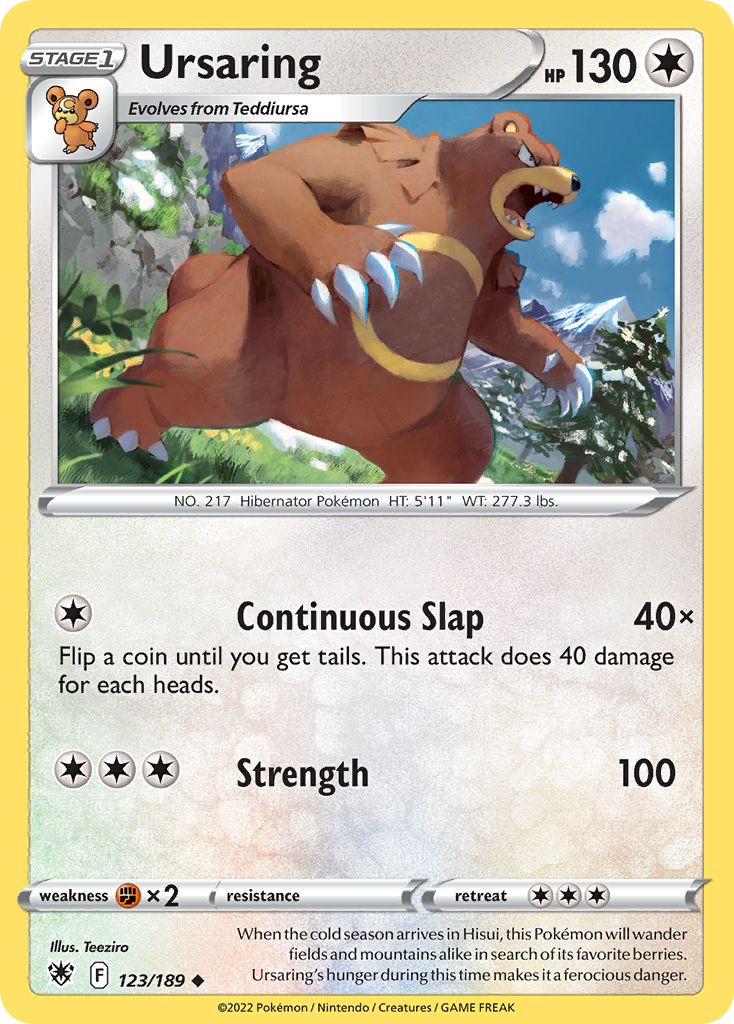
Ursaring
When the cold season arrives in Hisui, this Pokémon will wander fields and mountains alike in search of its favorite berries. Ursaring’s hunger during this time makes it a ferocious danger.
Flip a coin until you get tails. This attack does 40 damage for each heads.
| Supertype | Pokémon |
|---|---|
| Subtype | Stage 1 |
| HP | 130 |
| Types | Colorless |
| Attack | Continuous Slap |
| Attack cost | Colorless |
| Artist | Teeziro |
| Rarity | Uncommon |
| Pokédex | 217 |
| Evolves from | Teddiursa |
Informatie verkoper
- Shopnaam: DutchGem
- Verkoper DutchGem
-
Adres:
gekkestraat
179
2345GT Utrecht
Sword & Shield
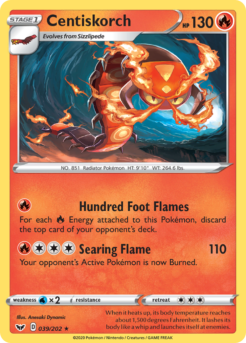
When it heats up, its body temperature reaches about 1,500 degrees Fahrenheit. It lashes its body like a whip and launches itself at enemies.
Primal Clash
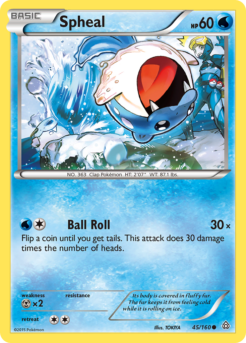
Its body is covered in fluffy fur. The fur keeps it from feeling cold while it is rolling on ice.
Gerelateerde producten
Sword & Shield
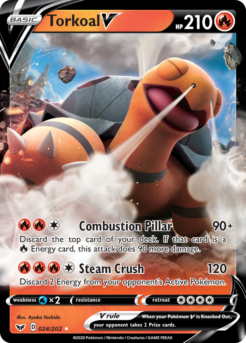
Discard the top card of your deck. If that card is a Fire Energy card, this attack does 90 more damage.
Sword & Shield
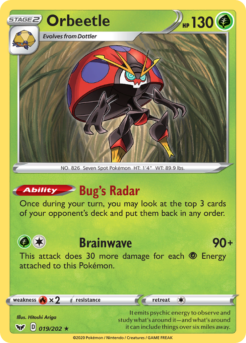
It emits psychic energy to observe and study what's around it—and what's around it can include things over six miles away.
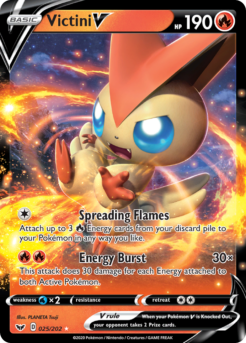
Sword & Shield
Attach up to 3 Fire Energy cards from your discard pile to your Pokémon in any way you like.
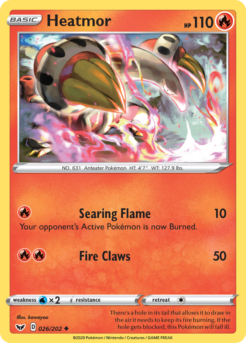
Sword & Shield
There's a hole in its tail that allows it to draw in the air it needs to keep its fire burning. If the hole gets blocked, this Pokémon will fall ill.
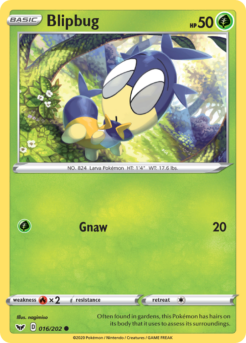
Sword & Shield
Often found in gardens, this Pokémon has hairs on its body that it uses to assess its surroundings.
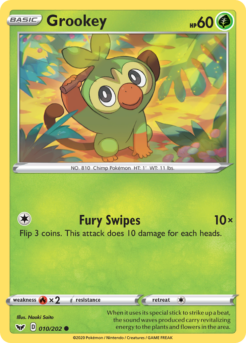
Sword & Shield
When it uses its special stick to strike up a beat, the sound waves produced carry revitalizing energy to the plants and flowers in the area.
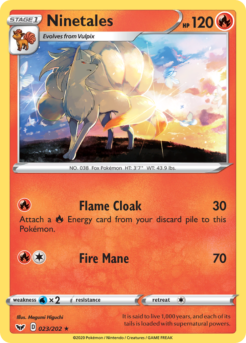
Sword & Shield
It is said to live 1,000 years, and each of its tails is loaded with supernatural powers.
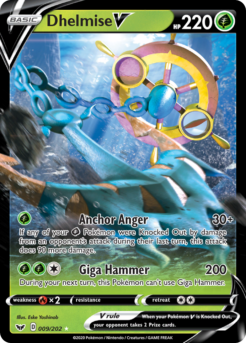
Sword & Shield
If any of your Grass Pokémon were Knocked Out by damage from an opponent’s attack during their last turn, this attack does 90 more damage.