



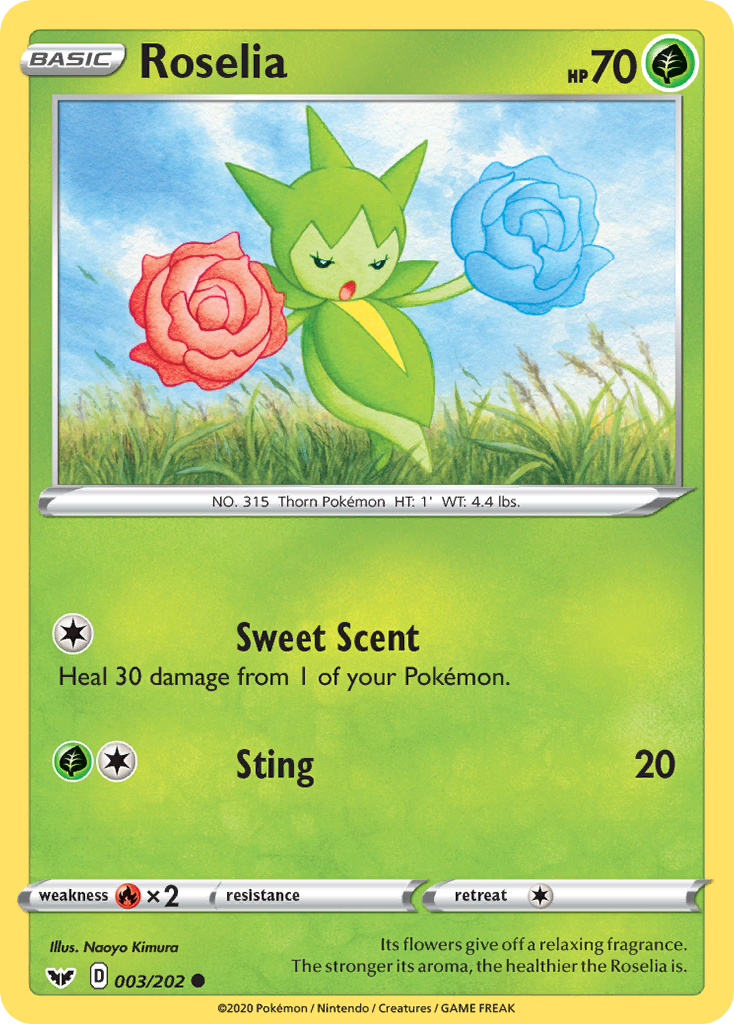
Roselia

Its flowers give off a relaxing fragrance. The stronger its aroma, the healthier the Roselia is.
Heal 30 damage from 1 of your Pokémon.
| Supertype | Pokémon |
|---|---|
| Subtype | Basic |
| HP | 70 |
| Types | Grass |
| Attack | Sweet Scent |
| Attack cost | Colorless |
| Artist | Naoyo Kimura |
| Rarity | Common |
| Pokédex | 315 |
| Evolves to | Roserade |
Informatie verkoper
- Shopnaam: DutchGem
- Verkoper DutchGem
-
Adres:
gekkestraat
179
2345GT Utrecht
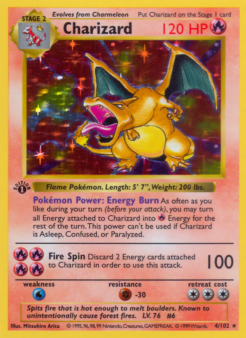
Base
Spits fire that is hot enough to melt boulders. Known to unintentionally cause forest fires.


Sword & Shield
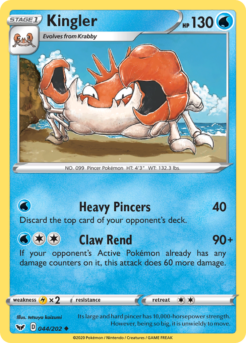
The large and hard pincer has 10,000-horsepower strength. However, being so big, it is unwieldy to move.
Battle Styles
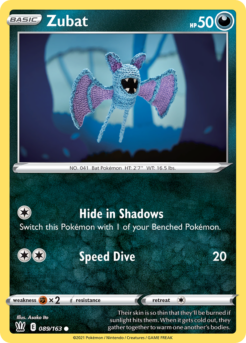
Their skin is so thin that they'll be burned if sunlight hits them. When it gets cold out, they gather together to warm one another's bodies.
Gerelateerde producten
Sword & Shield
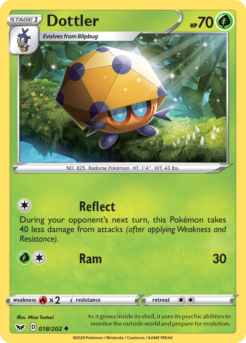
As it grows inside its shell, it uses its psychic abilities to monitor the outside world and prepare for evolution.
Sword & Shield
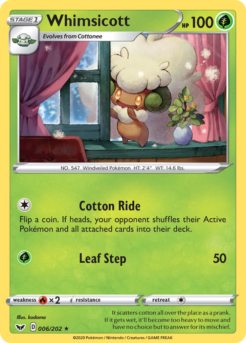
It scatters cotton all over the place as a prank. If it gets wet, it'll become too heavy to move and have no choice but to answer for its mischief.

Sword & Shield
When it uses its special stick to strike up a beat, the sound waves produced carry revitalizing energy to the plants and flowers in the area.
Sword & Shield
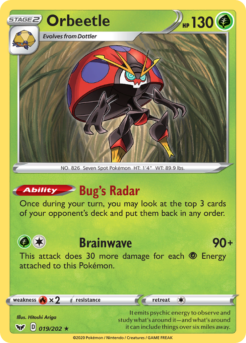
It emits psychic energy to observe and study what's around it—and what's around it can include things over six miles away.

Sword & Shield
When it uses its special stick to strike up a beat, the sound waves produced carry revitalizing energy to the plants and flowers in the area.
Sword & Shield
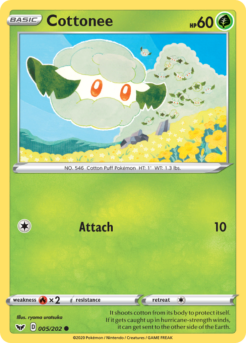
It shoots cotton from its body to protect itself. If it gets caught up in hurricane-strength winds, it can get sent to the other side of the Earth.
Sword & Shield
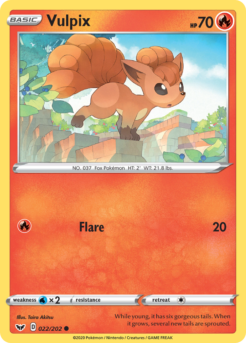
While young, it has six gorgeous tails. When it grows, several new tails are sprouted.
Sword & Shield
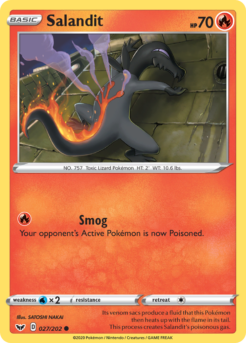
Its venom sacs produce a fluid that this Pokémon then heats up with the flame in its tail. This process creates Salandit's poisonous gas.