



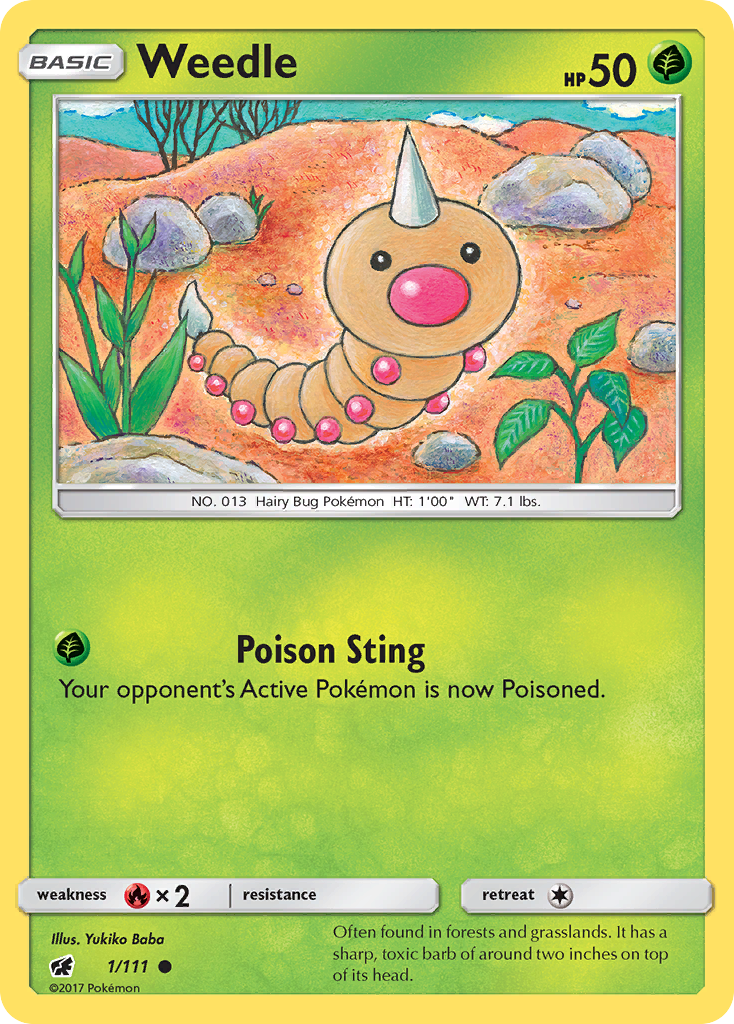
Weedle
Often found in forests and grasslands. It has a sharp, toxic barb of around two inches on top of its head.
Your opponent’s Active Pokémon is now Poisoned.
| Supertype | Pokémon |
|---|---|
| Subtype | Basic |
| HP | 50 |
| Types | Grass |
| Attack | Poison Sting |
| Attack cost | Grass |
| Artist | Yukiko Baba |
| Rarity | Common |
| Pokédex | 13 |
| Evolves to | Kakuna |
Informatie verkoper
- Shopnaam: DutchGem
- Verkoper DutchGem
-
Adres:
gekkestraat
179
2345GT Utrecht
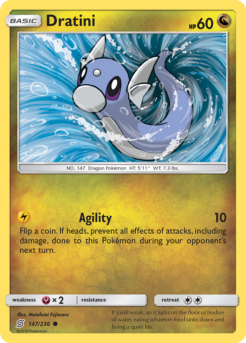
Sun & Moon
It's still weak, so it lurks on the floor of bodies of water, eating whatever food sinks down and living a quiet life.
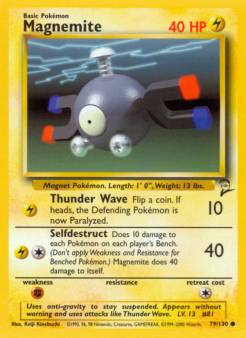
Base
Uses anti-gravity to stay suspended. Appears without warning and uses attacks like Thunder Wave.
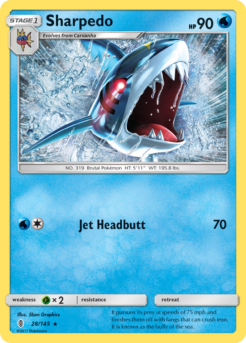
Guardians Rising
It pursues its prey at speeds of 75 mph and finishes them off with fangs that can crush iron. It is known as the bully of the sea.
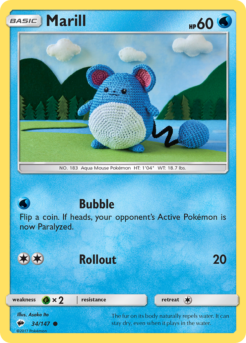
Burning Shadows
The fur on its body naturally repels water. It can stay dry, even when it plays in the water.
Sun & Moon
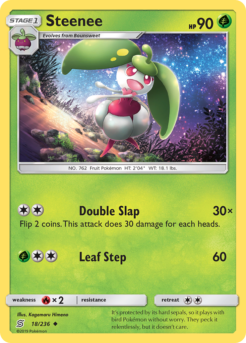
It's protected by its hard sepals, so it plays with bird Pokémon without worry. They peck it relentlessly, but it doesn't care.
Gerelateerde producten
Sun & Moon
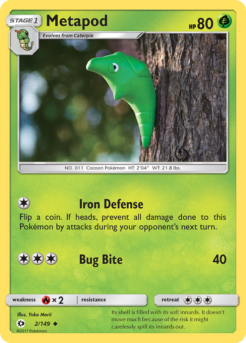
Its shell is filled with its soft innards. It doesn't move much because of the risk it might carelessly spill its innards out.
Sun & Moon
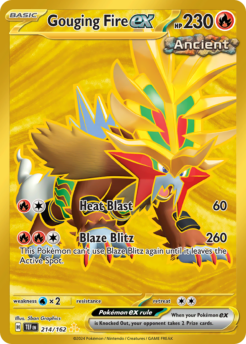
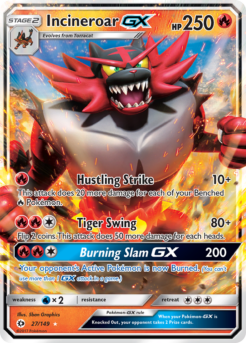
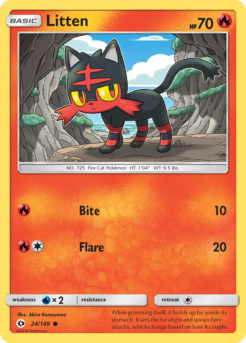
While grooming itself, it builds up fur inside its stomach. It sets the fur alight and spews fiery attacks, which change based on how it coughs.
Sun & Moon
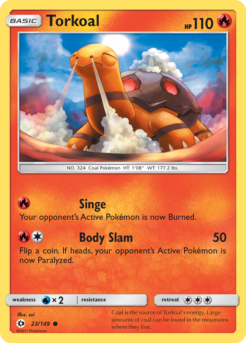
Coal is the source of Torkoal's energy. Large amounts of coal can be found in the mounts where they live.
Sun & Moon
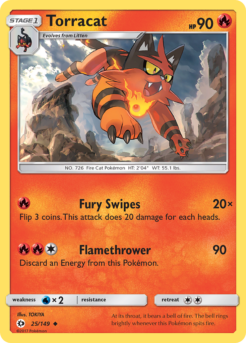
At its throat, it bears a bell of fire. The bell rings brightly whenever this Pokémon spits fire.
Sun & Moon
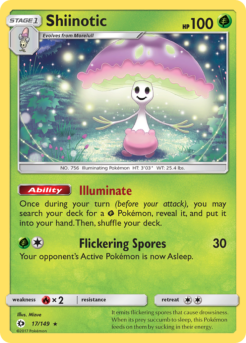
It emits flickering spores that cause drowsiness. When its prey succumb to sleep, this Pokémon feeds on them by sucking in their energy.
Sun & Moon
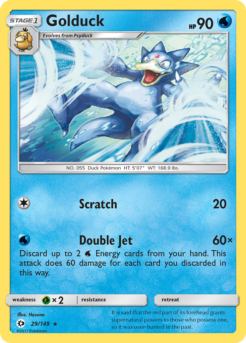
It is said that the red part of its forehead grants supernatural powers to those who posses one, so it was over-hunted in the past.
Sun & Moon
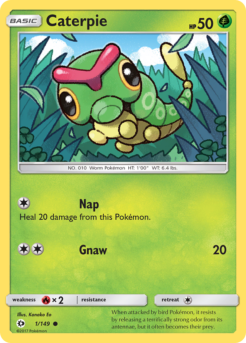
When attacked by bird Pokémon, it resists by releasing a terrifically strong odor from its antennae, but it often becomes their prey.