



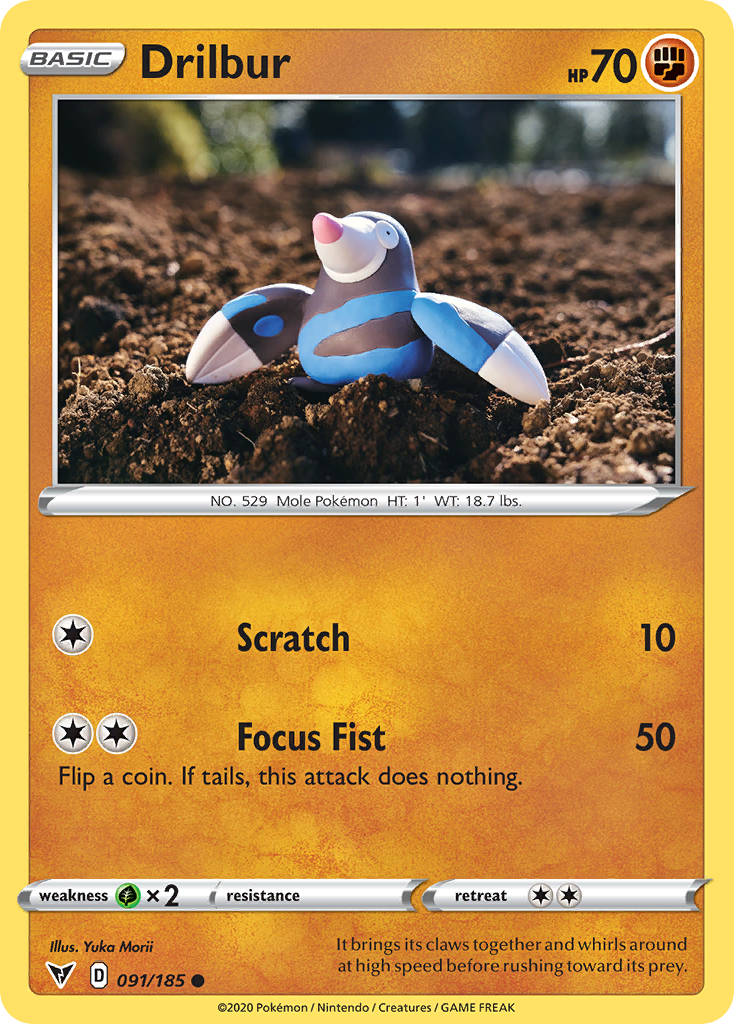
Drilbur
It brings its claws together and whirls around at high speed before rushing toward its prey.
| Supertype | Pokémon |
|---|---|
| Subtype | Basic |
| HP | 70 |
| Types | Fighting |
| Attack | Scratch |
| Attack cost | Colorless |
| Artist | Yuka Morii |
| Rarity | Common |
| Pokédex | 529 |
| Evolves to | Excadrill |
Vendor Information
- Store Name: DutchGem
- Vendor: DutchGem
-
Address:
gekkestraat
179
2345GT Utrecht
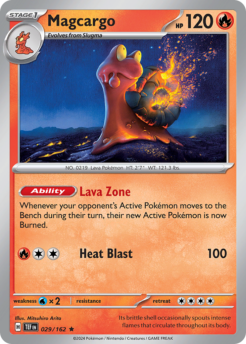
Scarlet & Violet
Its brittle shell occasionally spouts intense flames that circulate throughout its body.
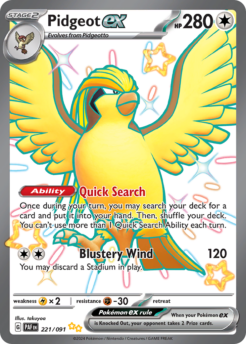
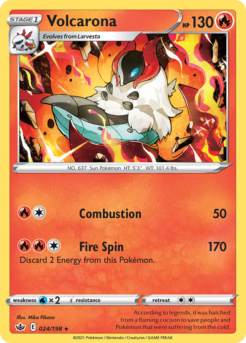
Chilling Reign
According to legends, it was hatched from a flaming cocoon to save people and Pokémon that were suffering from the cold.
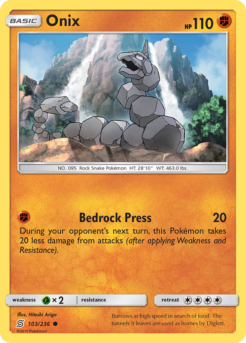
Sun & Moon
Burrows at high speed in search of food. The tunnels it leaves are used as homes by Diglett.
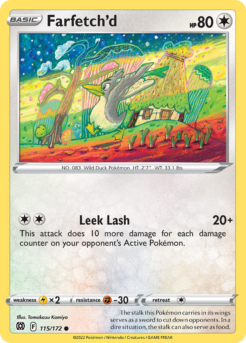
Brilliant Stars
The stalk this Pokémon carries in its wings serves as a sword to cut down opponents. In a dire situation, the stalk can also serve as food.
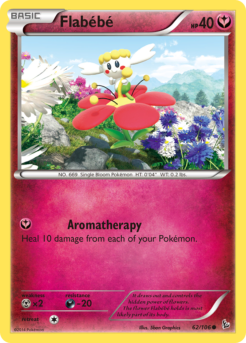
Flashfire
It draws out and controls the hidden power of flowers. The flower Flabébé holds is most likely part of its body.