



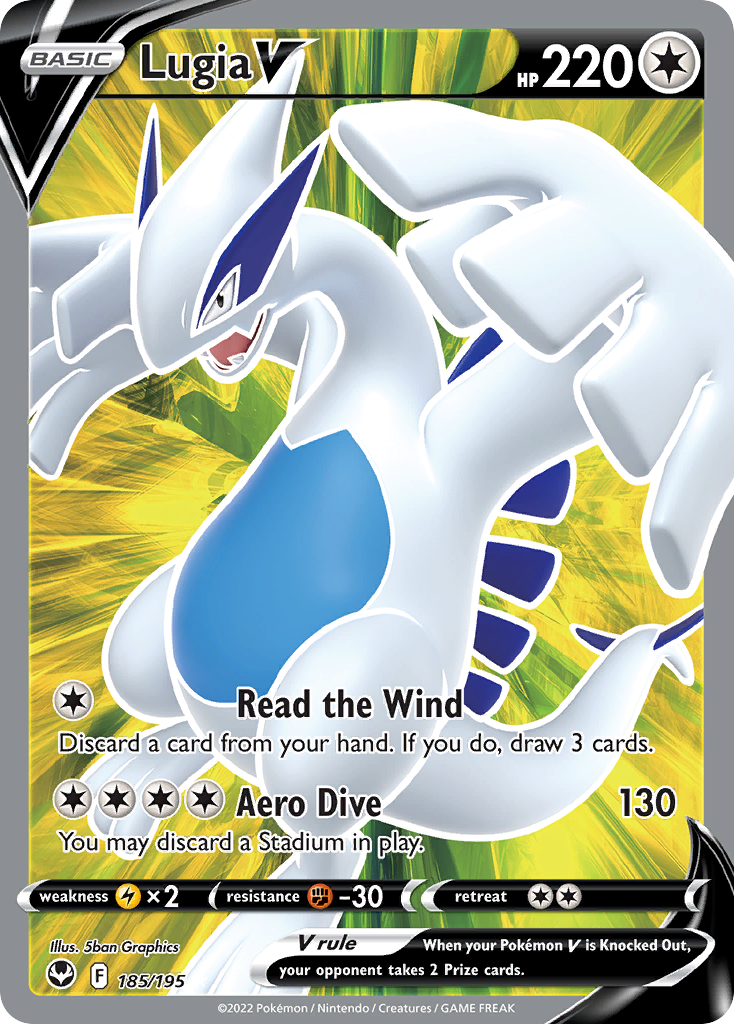
Discard a card from your hand. If you do, draw 3 cards.
| Supertype | Pokémon |
|---|---|
| Subtype | Basic |
| HP | 220 |
| Types | Colorless |
| Attack | Read the Wind |
| Attack cost | Colorless |
| Artist | 5ban Graphics |
| Rarity | Rare Ultra |
| Pokédex | 249 |
Vendor Information
- Store Name: DutchGem
- Vendor: DutchGem
-
Address:
gekkestraat
179
2345GT Utrecht
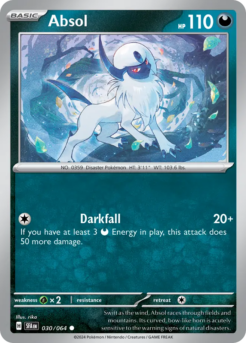
Scarlet & Violet
If you have at least 3 Darkness Energy in play, this attack does 50 more damage.
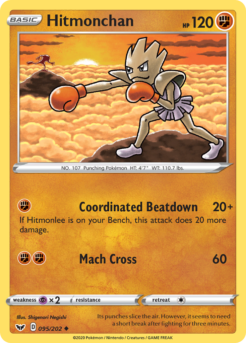
Sword & Shield
Its punches slice the air. However, it seems to need a short break after fighting for three minutes.
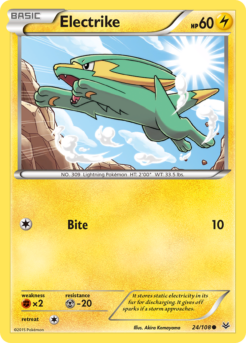
Roaring Skies
It stores static electricity in its fur for discharging. It gives off sparks if a storm approaches.
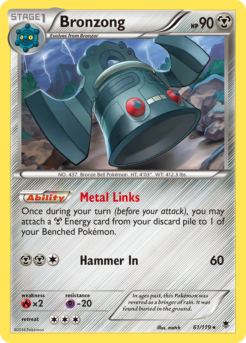
Phantom Forces
In ages past, this Pokémon was revered as a bringer of rain. It was found buried in the ground.
Sword & Shield
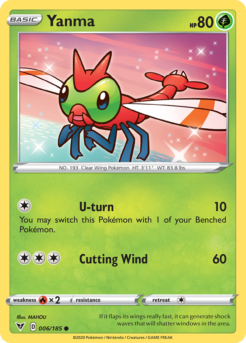
If it flaps its wings really fast, it can generate shock waves that will shatter windows in the area.
Fates Collide
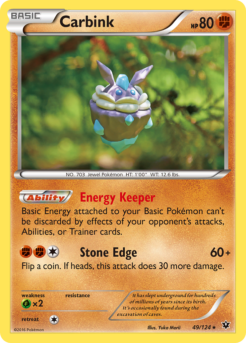
It has slept underground for hundreds of millions of years since its birth. It's occasionally found during the excavation of caves.
מוצרים קשורים
Sword & Shield
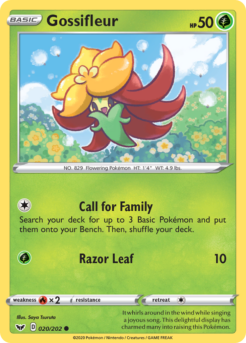
It whirls around in the wind while singing a joyous song. This delightful display has charmed many into raising this Pokémon.
Sword & Shield
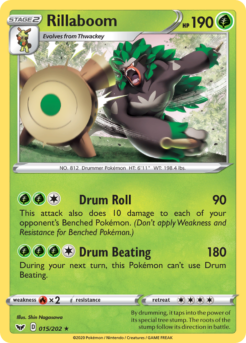
By drumming, it taps into the power of its special tree stump. The roots of the stump follow its direction in battle.
Sword & Shield
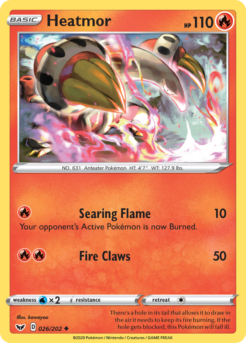
There's a hole in its tail that allows it to draw in the air it needs to keep its fire burning. If the hole gets blocked, this Pokémon will fall ill.
Sword & Shield
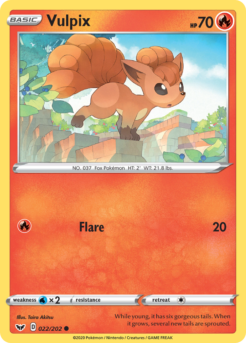
While young, it has six gorgeous tails. When it grows, several new tails are sprouted.
Sword & Shield
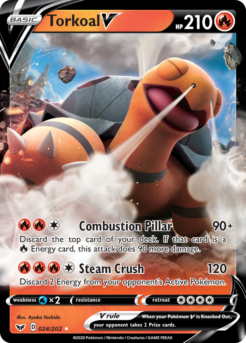
Discard the top card of your deck. If that card is a Fire Energy card, this attack does 90 more damage.
Sword & Shield
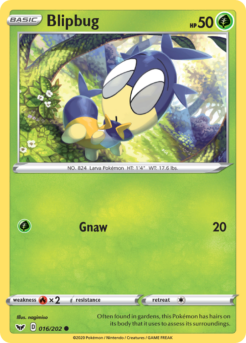
Often found in gardens, this Pokémon has hairs on its body that it uses to assess its surroundings.
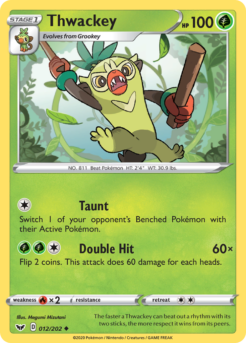
Sword & Shield
The faster a Thwackey can beat out a rhythm with its two sticks, the more respect it wins from its peers.
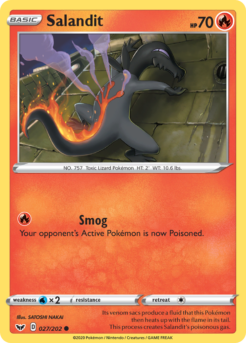
Sword & Shield
Its venom sacs produce a fluid that this Pokémon then heats up with the flame in its tail. This process creates Salandit's poisonous gas.