



Escavalier
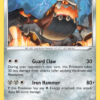
They use shells they’ve stolen from Shelmet to arm and protect themselves. They’re very popular Pokémon in the Galar region.

This attack also does 30 damage to 1 of your opponent’s Benched Pokémon. (Don’t apply Weakness and Resistance for Benched Pokémon.)
| Supertype | Pokémon |
|---|---|
| Subtype | Stage 1 |
| HP | 120 |
| Types | Metal |
| Attack | Pike |
| Attack cost | Metal |
| Artist | Nurikabe |
| Rarity | Rare |
| Pokédex | 589 |
| Evolves from | Karrablast |
Vendor Information
- Store Name: DutchGem
- Vendor: DutchGem
-
Address:
gekkestraat
179
2345GT Utrecht
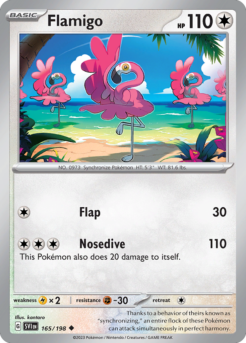
Scarlet & Violet
Thanks to a behavior of theirs known as "synchronizing," an entire flock of these Pokémon can attack simultaneously in perfect harmony.
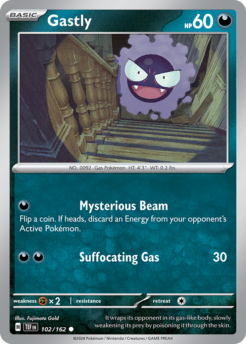
Scarlet & Violet
It wraps its opponent in its gas-like body, slowly weakening its prey by poisoning it through the skin.
Evolving Skies
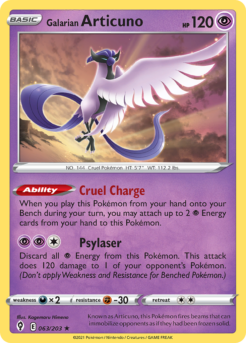
Known as Articuno, this Pokémon fires beams that can immobilize opponents as if they had been frozen solid.

Brilliant Stars
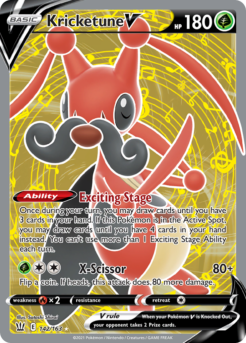
If you go first, you can use this attack during your first turn. Search your deck for a Lightning Energy card and attach it to this Pokémon. Then, shuffle your deck.
Rebel Clash
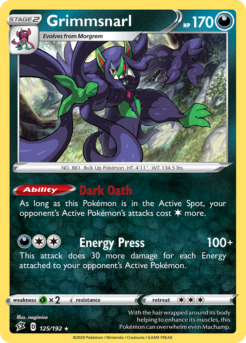
With the hair wrapped around its body helping to enhance its muscles, this Pokémon can overwhelm even Machamp.
Tutustu myös

Sword & Shield
Search your deck for up to 2 Pokémon, reveal them, and put them into your hand. Then, shuffle your deck.
Sword & Shield
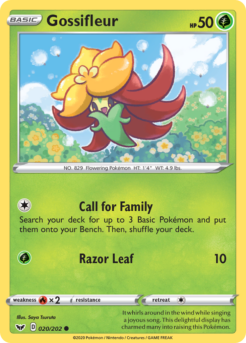
It whirls around in the wind while singing a joyous song. This delightful display has charmed many into raising this Pokémon.
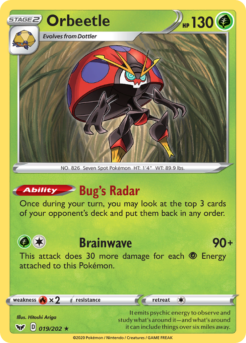
Sword & Shield
It emits psychic energy to observe and study what's around it—and what's around it can include things over six miles away.
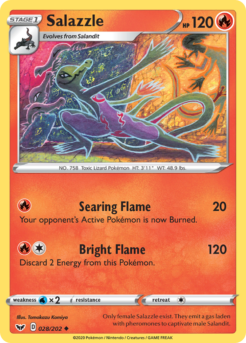
Sword & Shield
Only female Salazzle exist. They emit a gas laden with pheromones to captivate male Salandit.
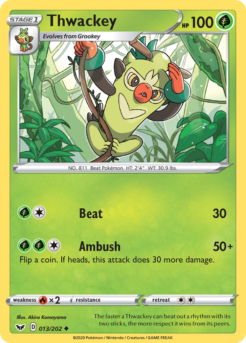
Sword & Shield
The faster a Thwackey can beat out a rhythm with its two sticks, the more respect it wins from its peers.
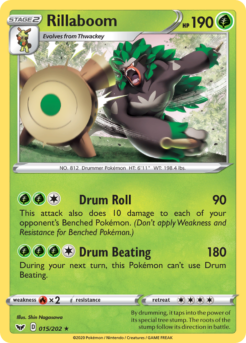
Sword & Shield
By drumming, it taps into the power of its special tree stump. The roots of the stump follow its direction in battle.
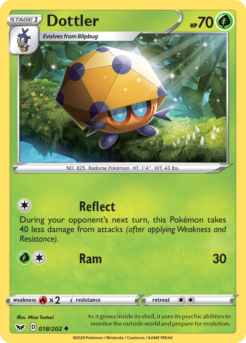
Sword & Shield
As it grows inside its shell, it uses its psychic abilities to monitor the outside world and prepare for evolution.
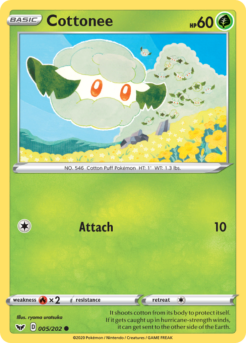
Sword & Shield
It shoots cotton from its body to protect itself. If it gets caught up in hurricane-strength winds, it can get sent to the other side of the Earth.