



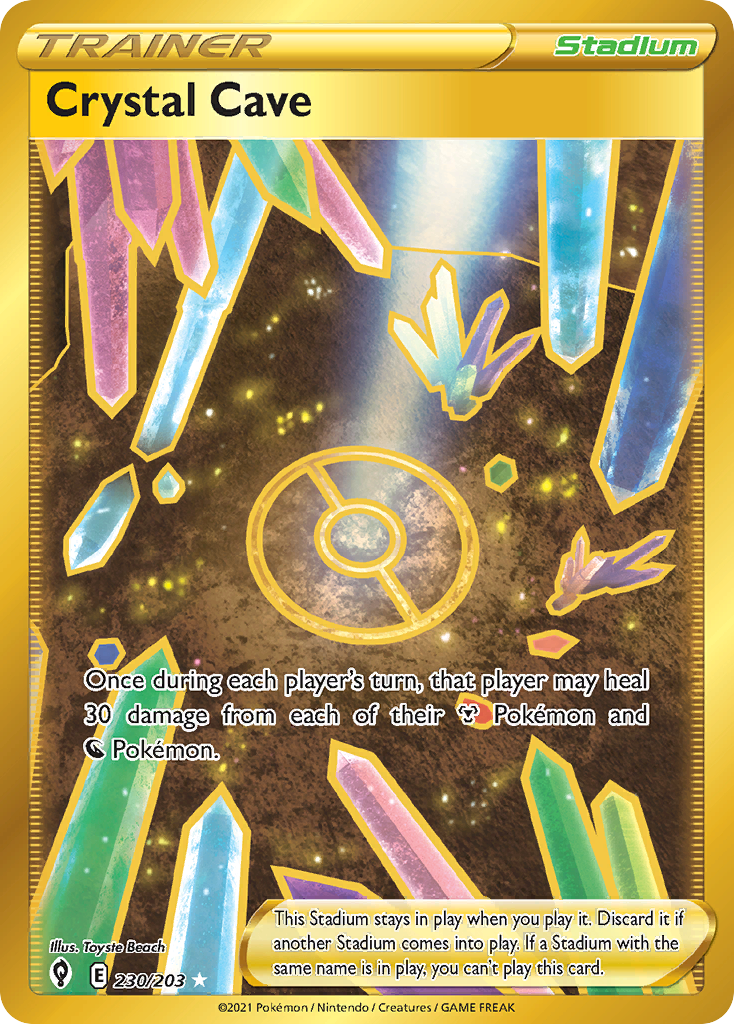



| Supertype | Trainer |
|---|---|
| Subtype | Stadium |
| Artist | Toyste Beach |
| Rarity | Rare Secret |
Vendor Information
- Store Name: DutchGem
- Vendor: DutchGem
-
Address:
gekkestraat
179
2345GT Utrecht
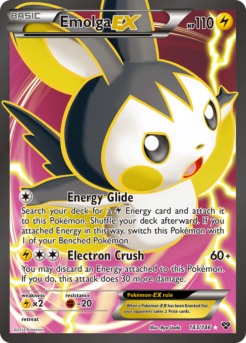
XY
Search your deck for a Lightning Energy card and attach it to this Pokémon. Shuffle your deck afterward. If you attached Energy in this way, switch this Pokémon with 1 of your Benched Pokémon.
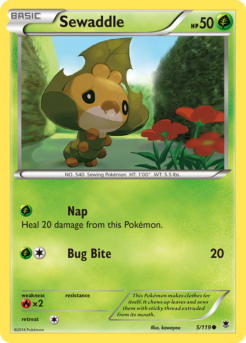
Phantom Forces
This Pokémon makes clothes for itself. It chews up leaves and sews them with sticky thread extruded from its mouth.
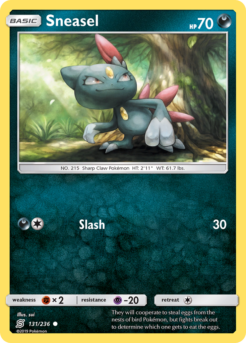
Sun & Moon
They will cooperate to steal eggs from the nests of bird Pokémon, but fights break out to determine which one gets to eat the eggs.
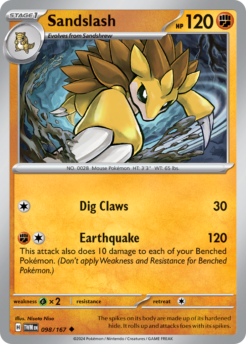
Scarlet & Violet
The spikes on its body are made up of its hardened hide. It rolls up and attacks foes with its spikes.
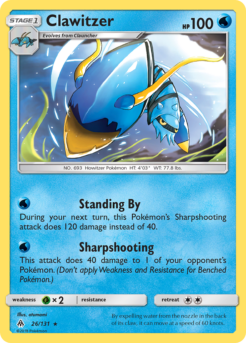
Forbidden Light
By expelling water from the nozzle in the back of its claw, it can move at a speed of 60 knots.
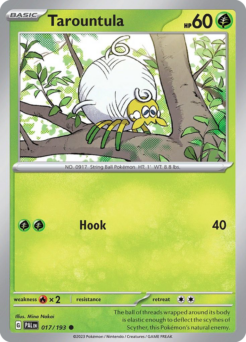
Paldea Evolved
The ball of threads wrapped around its body is elastic enough to deflect the scythes of Scyther, this Pokémon's natural enemy.
Tutustu myös
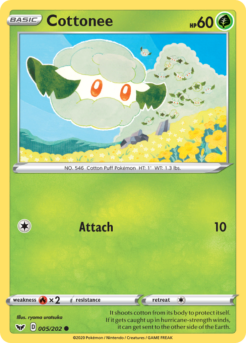
Sword & Shield
It shoots cotton from its body to protect itself. If it gets caught up in hurricane-strength winds, it can get sent to the other side of the Earth.
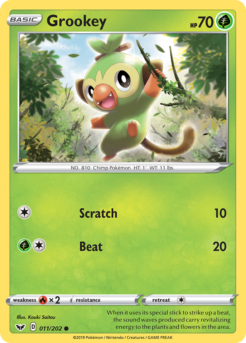
Sword & Shield
When it uses its special stick to strike up a beat, the sound waves produced carry revitalizing energy to the plants and flowers in the area.

Sword & Shield
As it grows inside its shell, it uses its psychic abilities to monitor the outside world and prepare for evolution.
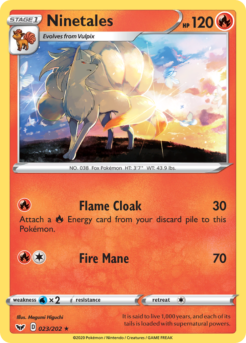
Sword & Shield
It is said to live 1,000 years, and each of its tails is loaded with supernatural powers.
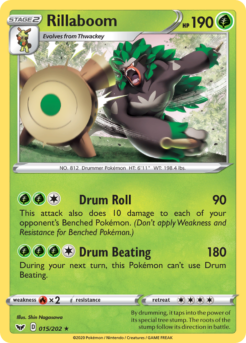
Sword & Shield
By drumming, it taps into the power of its special tree stump. The roots of the stump follow its direction in battle.

Sword & Shield
Search your deck for up to 2 Pokémon, reveal them, and put them into your hand. Then, shuffle your deck.
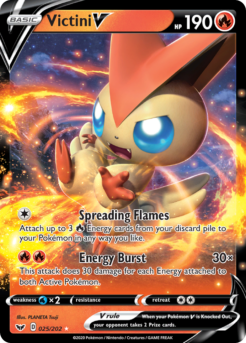
Sword & Shield
Attach up to 3 Fire Energy cards from your discard pile to your Pokémon in any way you like.
Sword & Shield
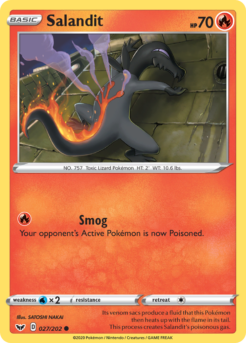
Its venom sacs produce a fluid that this Pokémon then heats up with the flame in its tail. This process creates Salandit's poisonous gas.