



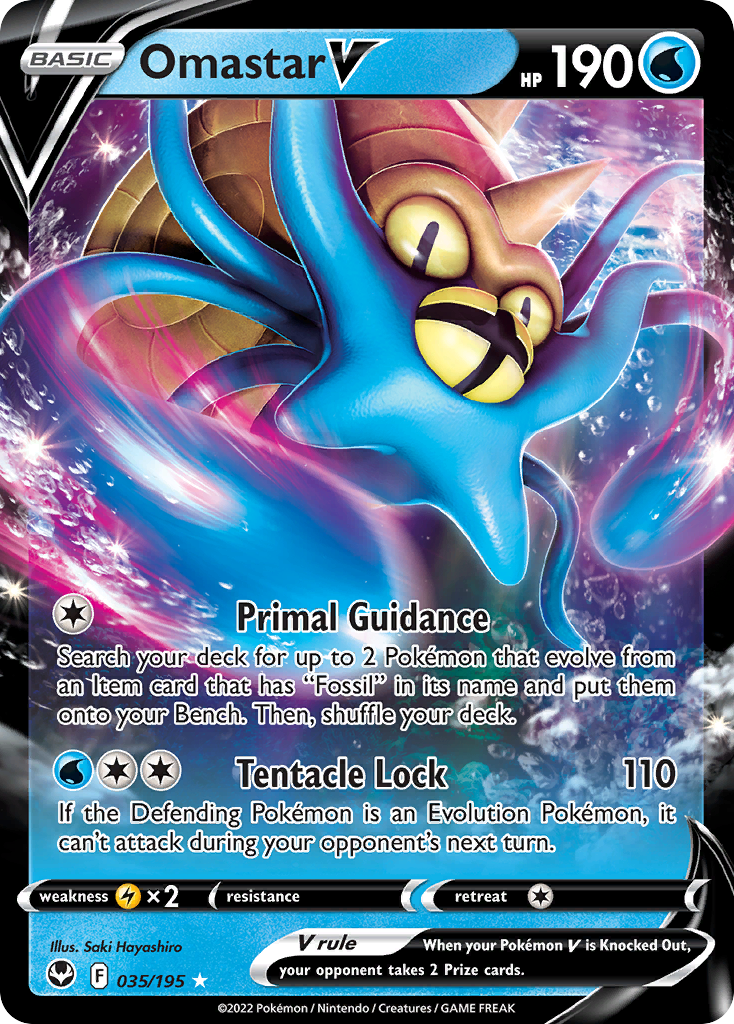
Search your deck for up to 2 Pokémon that evolve from an Item card that has ”Fossil” in its name and put them onto your Bench. Then, shuffle your deck.
| Supertype | Pokémon |
|---|---|
| Subtype | Basic |
| HP | 190 |
| Types | Water |
| Attack | Primal Guidance |
| Attack cost | Colorless |
| Artist | Saki Hayashiro |
| Rarity | Rare Holo V |
| Pokédex | 139 |
Vendor Information
- Store Name: DutchGem
- Vendor: DutchGem
-
Address:
gekkestraat
179
2345GT Utrecht
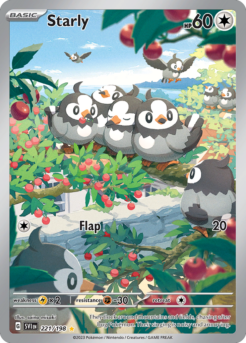
Scarlet & Violet
They flock around mountains and fields, chasing after bug Pokémon. Their singing is noisy and annoying.
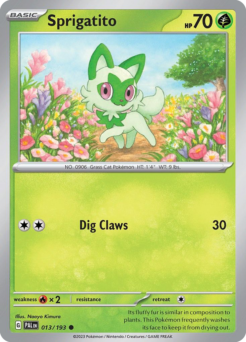
Paldea Evolved
Its fluffy fur is similar in composition to plants. This Pokémon frequently washes its face to keep it from drying out.
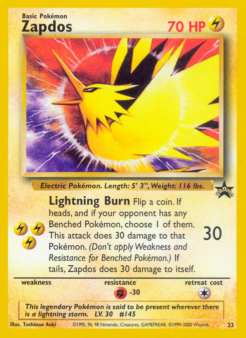
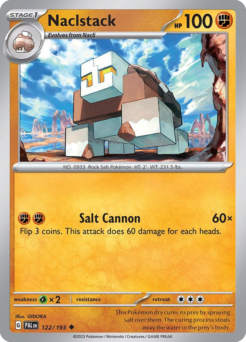
Paldea Evolved
This Pokémon dry cures its prey by spraying salt over them. The curing process steals away the water in the prey's body.
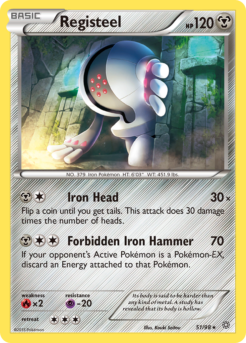
Ancient Origins
Its body is said to be harder than any kind of metal. A study has revealed that its body is hollow.
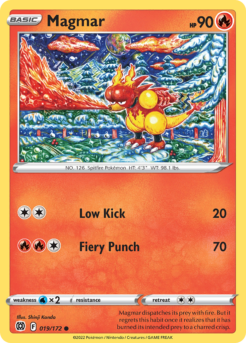
Brilliant Stars
Magmar dispatches its prey with fire. But it regrets this habit once it realizes that it has burned its intended prey to a charred crisp.