



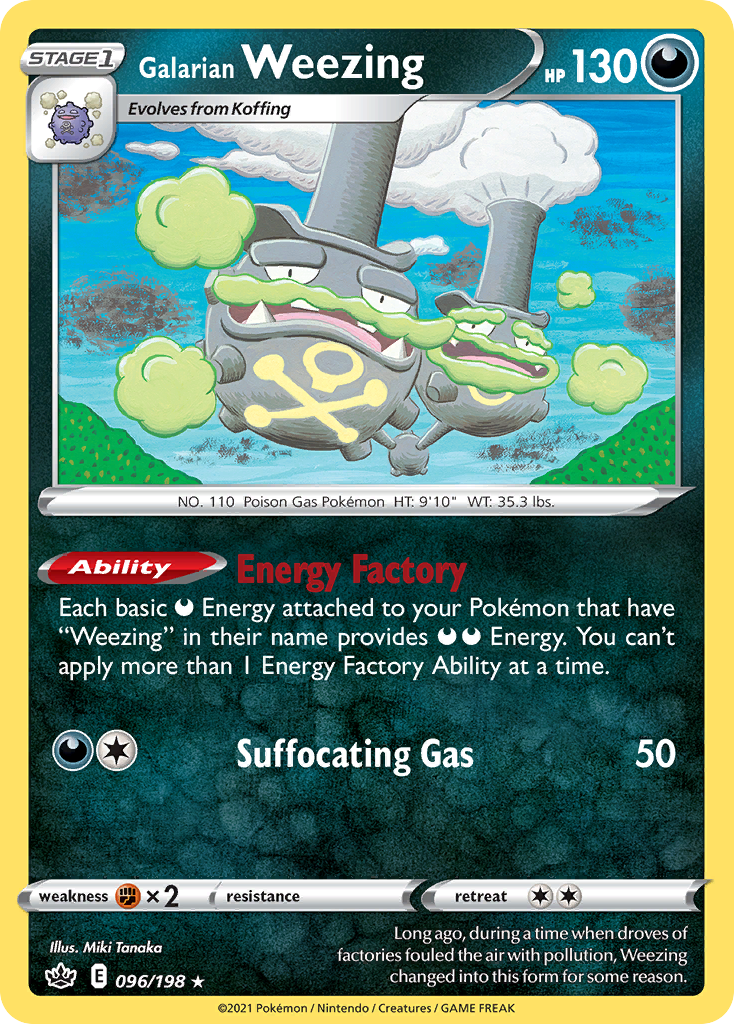
Galarian Weezing
Long ago, during a time when droves of factories fouled the air with pollution, Weezing changed into this form for some reason.
| Supertype | Pokémon |
|---|---|
| Subtype | Stage 1 |
| HP | 130 |
| Types | Darkness |
| Attack | Suffocating Gas |
| Attack cost | Darkness |
| Artist | Miki Tanaka |
| Rarity | Rare |
| Pokédex | 110 |
| Evolves from | Koffing |
Vendor Information
- Store Name: DutchGem
- Vendor: DutchGem
-
Address:
gekkestraat
179
2345GT Utrecht

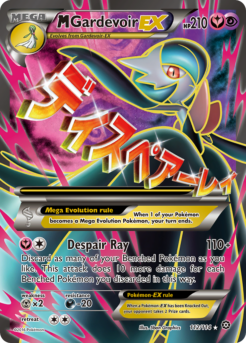
Steam Siege
Discard as many of your Benched Pokémon as you like. This attack does 10 more damage for each Benched Pokémon you discarded in this way.
XY
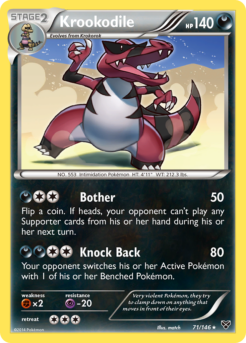
Very violent Pokémon, they try to clamp down on anything that moves in front of their eyes.
Tutustu myös
Sword & Shield
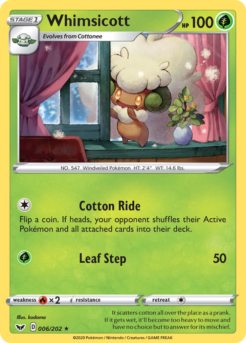
It scatters cotton all over the place as a prank. If it gets wet, it'll become too heavy to move and have no choice but to answer for its mischief.
Sword & Shield
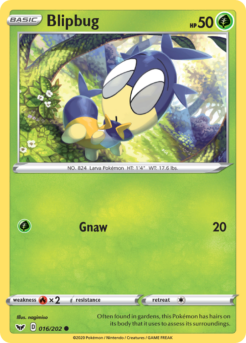
Often found in gardens, this Pokémon has hairs on its body that it uses to assess its surroundings.
Sword & Shield
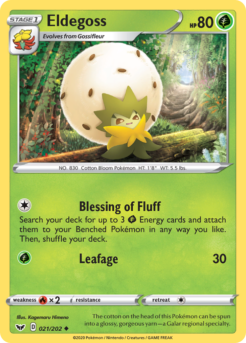
The cotton on the head of this Pokémon can be spun into a glossy, gorgeous yarn—a Galar regional specialty.
Sword & Shield
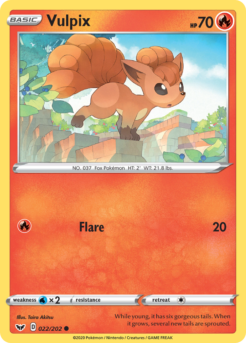
While young, it has six gorgeous tails. When it grows, several new tails are sprouted.
Sword & Shield
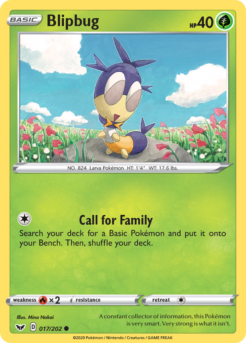
A constant collector of information, this Pokémon is very smart. Very strong is what it isn't.
Sword & Shield
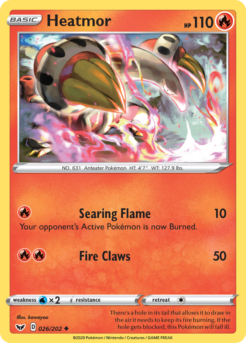
There's a hole in its tail that allows it to draw in the air it needs to keep its fire burning. If the hole gets blocked, this Pokémon will fall ill.
Sword & Shield
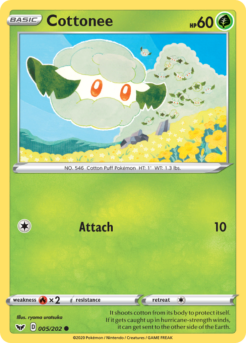
It shoots cotton from its body to protect itself. If it gets caught up in hurricane-strength winds, it can get sent to the other side of the Earth.
Sword & Shield
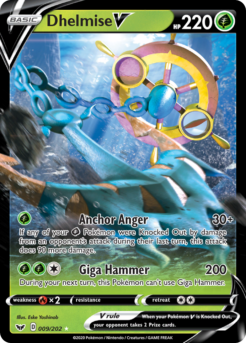
If any of your Grass Pokémon were Knocked Out by damage from an opponent’s attack during their last turn, this attack does 90 more damage.