



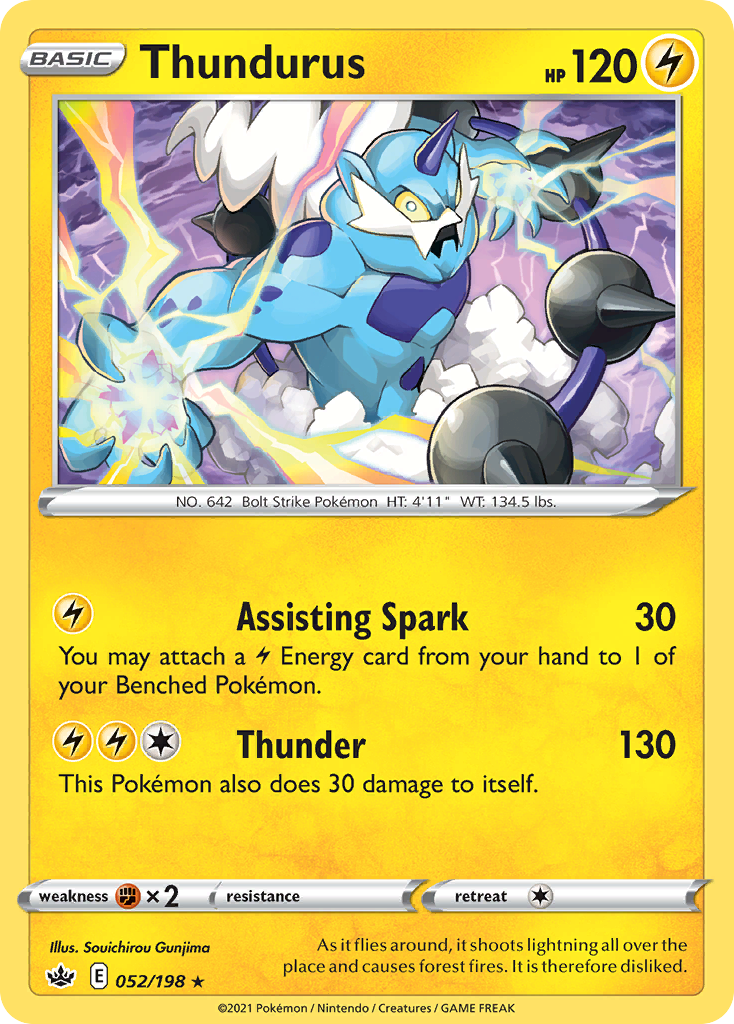
Thundurus
As it flies around, it shoots lightning all over the place and causes forest fires. It is therefore disliked.
You may attach a Lightning Energy card from your hand to 1 of your Benched Pokémon.
| Supertype | Pokémon |
|---|---|
| Subtype | Basic |
| HP | 120 |
| Types | Lightning |
| Attack | Assisting Spark |
| Attack cost | Lightning |
| Artist | Souichirou Gunjima |
| Rarity | Rare Holo |
| Pokédex | 642 |
Vendor Information
- Store Name: DutchGem
- Vendor: DutchGem
-
Address:
gekkestraat
179
2345GT Utrecht
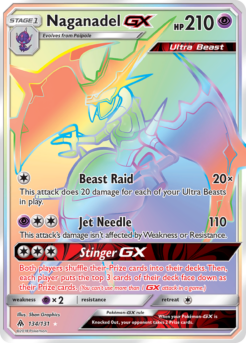
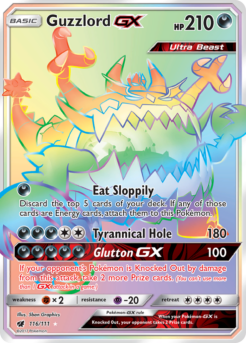
Crimson Invasion
Discard the top 5 cards of your deck. If any of those cards are Energy cards, attach them to this Pokémon.
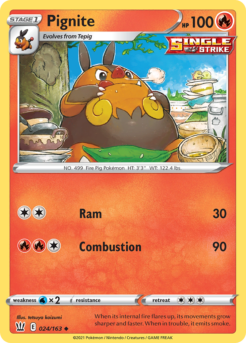
Battle Styles
When its internal fire flares up, its movements grow sharper and faster. When in trouble, it emits smoke.
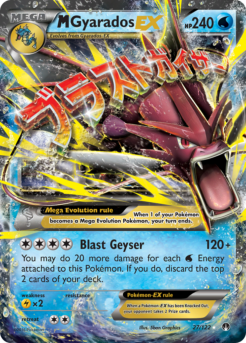
BREAKpoint
You may do 20 more damage for each Water Energy attached to this Pokémon. If you do, discard the top 2 cards of your deck.
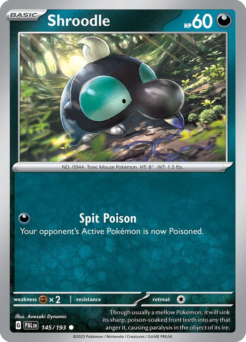
Paldea Evolved
Though usually a mellow Pokémon, it will sink its sharp, poison-soaked front teeth into any that anger it, causing paralysis in the object of its ire.
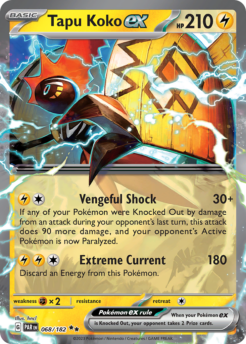
Paradox Rift
If any of your Pokémon were Knocked Out by damage from an attack during your opponent’s last turn, this attack does 90 more damage, and your opponent’s Active Pokémon is now Paralyzed.
Tutustu myös
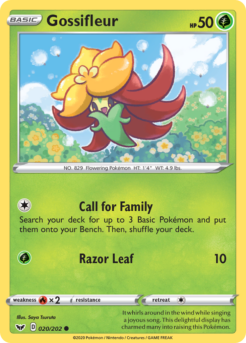
Sword & Shield
It whirls around in the wind while singing a joyous song. This delightful display has charmed many into raising this Pokémon.
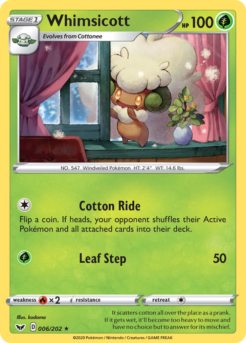
Sword & Shield
It scatters cotton all over the place as a prank. If it gets wet, it'll become too heavy to move and have no choice but to answer for its mischief.
Sword & Shield
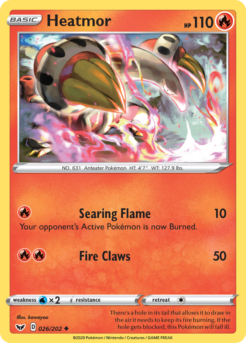
There's a hole in its tail that allows it to draw in the air it needs to keep its fire burning. If the hole gets blocked, this Pokémon will fall ill.
Sword & Shield
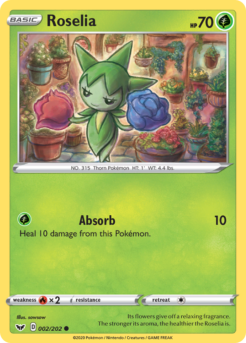
Its flowers give off a relaxing fragrance. The stronger its aroma, the healthier the Roselia is.
Sword & Shield
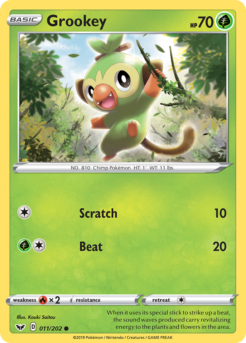
When it uses its special stick to strike up a beat, the sound waves produced carry revitalizing energy to the plants and flowers in the area.
Sword & Shield
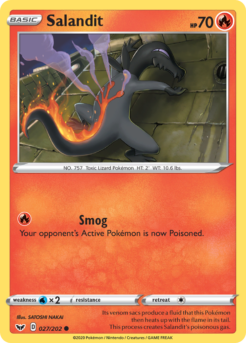
Its venom sacs produce a fluid that this Pokémon then heats up with the flame in its tail. This process creates Salandit's poisonous gas.
Sword & Shield
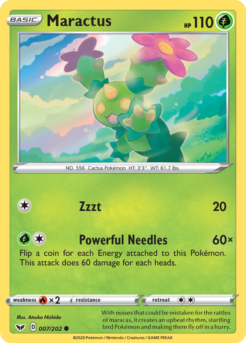
With noises that could be mistaken for the rattles of maracas, it creates an upbeat rhythm, startling bird Pokémon and making them fly off in a hurry.
Sword & Shield
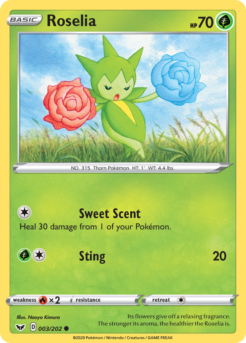
Its flowers give off a relaxing fragrance. The stronger its aroma, the healthier the Roselia is.