



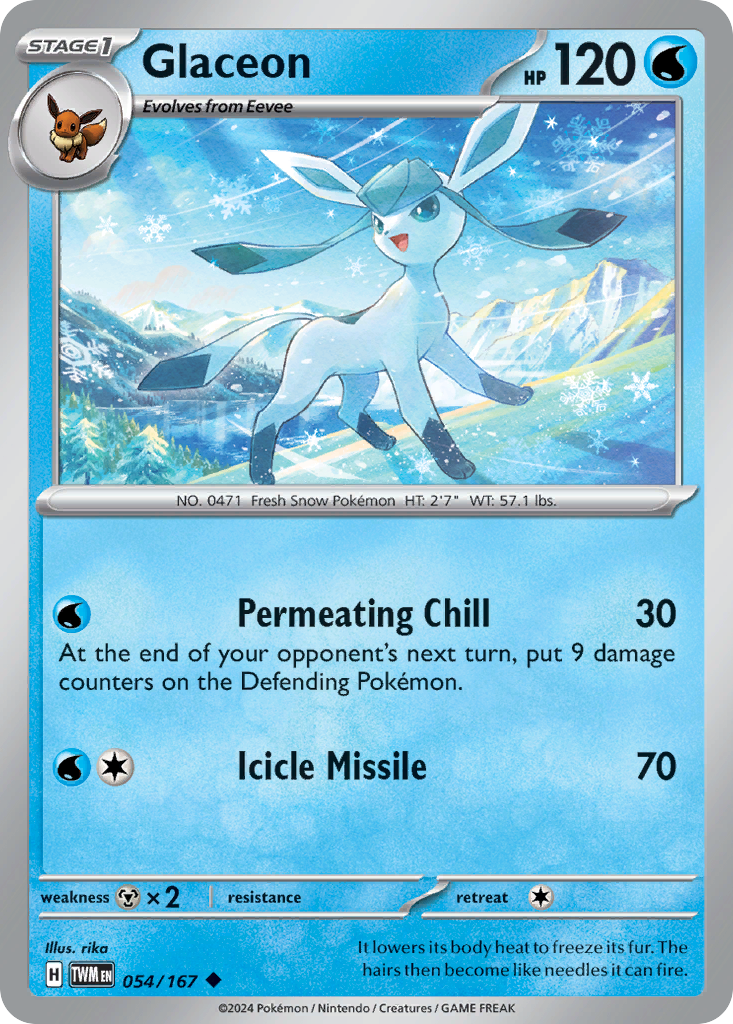
Glaceon

It lowers its body heat to freeze its fur. The hairs then become like needles it can fire.
At the end of your opponent’s next turn, put 9 damage counters on the Defending Pokémon.
| Supertype | Pokémon |
|---|---|
| Subtype | Stage 1 |
| HP | 120 |
| Types | Water |
| Attack | Permeating Chill |
| Attack cost | Water |
| Artist | rika |
| Rarity | Uncommon |
| Pokédex | 471 |
| Evolves from | Eevee |
Vendor Information
- Store Name: DutchGem
- Vendor: DutchGem
-
Address:
gekkestraat
179
2345GT Utrecht
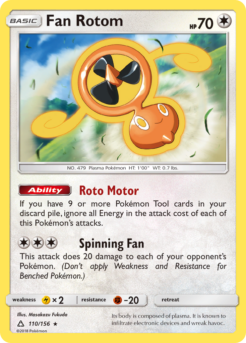
Sun & Moon
Its body is composed of plasma. It is known to infiltrate electronic devices and wreak havoc.
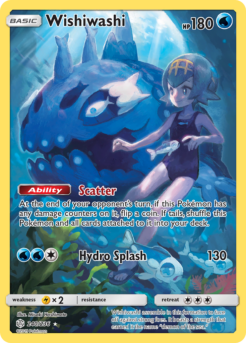
Cosmic Eclipse
Wishiwashi assemble in this formation to face off against strong foes. It boasts a strength that earned it the name "demon of the sea."
Tutustu myös
Scarlet & Violet
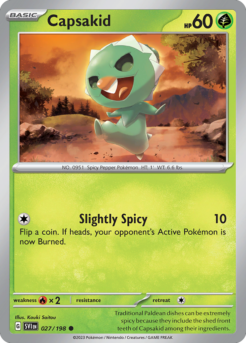
Traditional Paldean dishes can be extremely spicy because they include the shed front teeth of Capsakid among their ingredients.
Scarlet & Violet
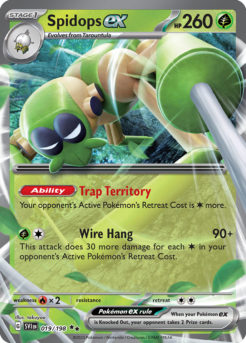
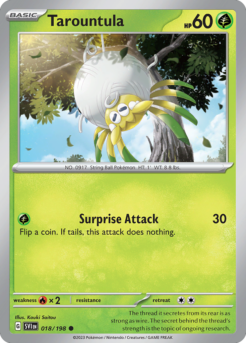
The thread it secretes from its rear is as strong as wire. The secret behind the thread's strength is the topic of ongoing research.
Scarlet & Violet
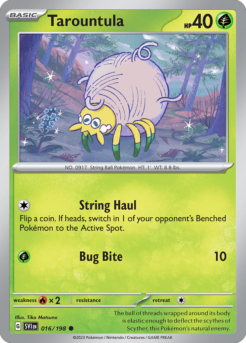
The ball of threads wrapped around its body is elastic enough to deflect the scythes of Scyther, this Pokémon's natural enemy.
Scarlet & Violet
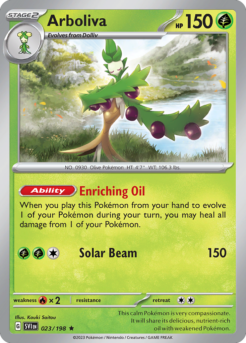
This calm Pokémon is very compassionate. It will share its delicious, nutrient-rich oil with weakened Pokémon.
Scarlet & Violet
The thread it secretes from its rear is as strong as wire. The secret behind the thread's strength is the topic of ongoing research.

Scarlet & Violet
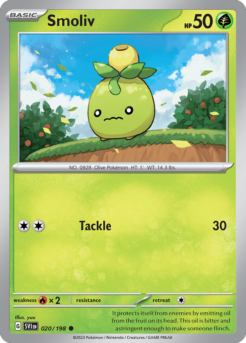
It protects itself from enemies by emitting oil from the fruit on its head. This oil is bitter and astringent enough to make someone flinch.
Scarlet & Violet
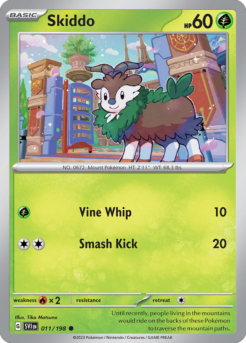
Until recently, people living in the mountains would ride on the back of these Pokémon to traverse the mountain paths.
Scarlet & Violet
It protects itself from enemies by emitting oil from the fruit on its head. This oil is bitter and astringent enough to make someone flinch.