



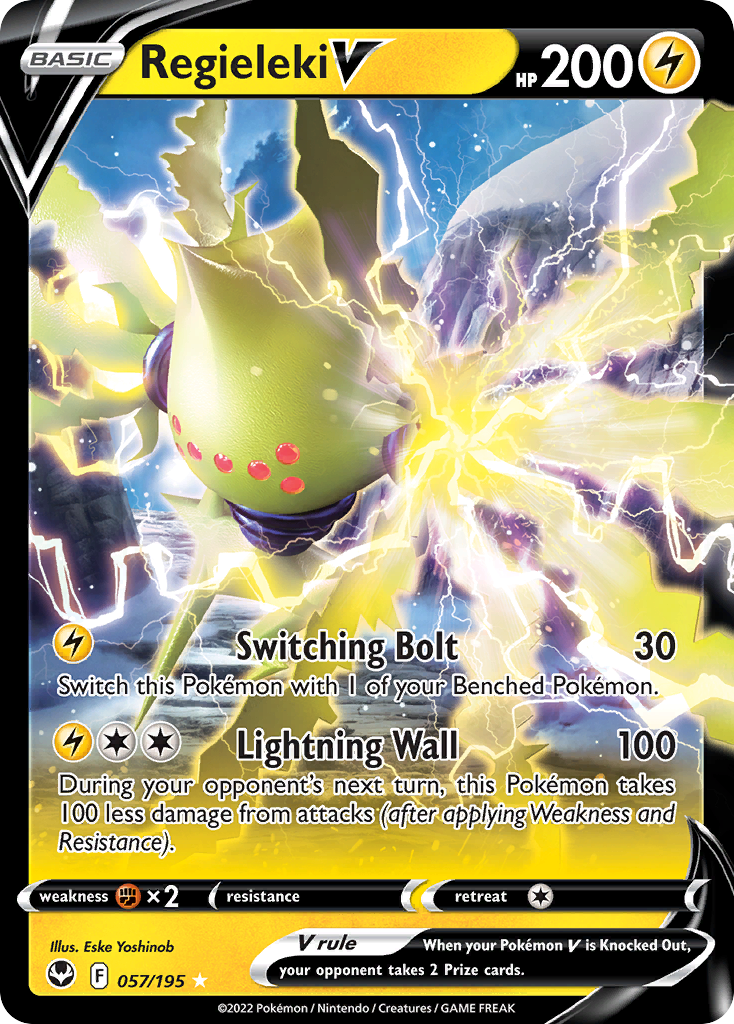

Switch this Pokémon with 1 of your Benched Pokémon.
| Supertype | Pokémon |
|---|---|
| Subtype | Basic |
| HP | 200 |
| Types | Lightning |
| Attack | Switching Bolt |
| Attack cost | Lightning |
| Artist | Eske Yoshinob |
| Rarity | Rare Holo V |
| Pokédex | 894 |
Información del vendedor
- Nombre de la tienda: DutchGem
- Vendedor: DutchGem
-
Dirección:
gekkestraat
179
2345GT Utrecht

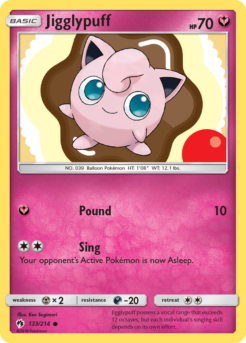
Lost Thunder
Jigglypuff posses a vocal range that exceeds 12 octaves, but each individual's singing skill depends on its own effort.
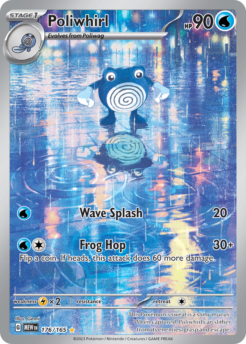
151
This Pokémon's sweat is a slimy mucus. When captured, Poliwhirl can slither from its enemies' grasp and escape.
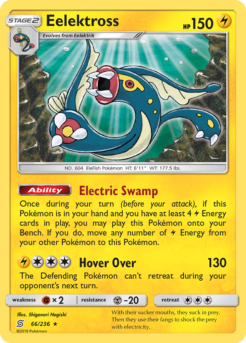
Sun & Moon
With their sucker mouths, they suck in prey. Then they use their fangs to shock the prey with electricity.
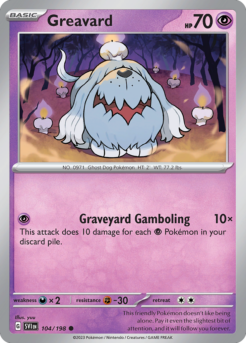
Scarlet & Violet
This friendly Pokémon doesn't like being alone. Pay it even the slightest bit of attention, and it will follow you forever.

Productos relacionados
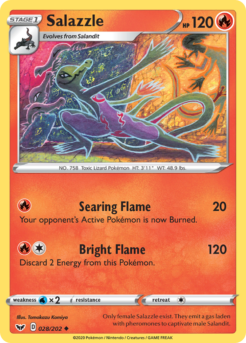
Sword & Shield
Only female Salazzle exist. They emit a gas laden with pheromones to captivate male Salandit.
Sword & Shield
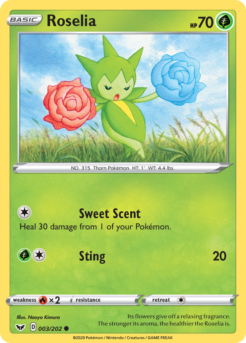
Its flowers give off a relaxing fragrance. The stronger its aroma, the healthier the Roselia is.
Sword & Shield
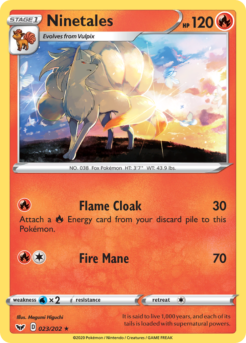
It is said to live 1,000 years, and each of its tails is loaded with supernatural powers.
Sword & Shield
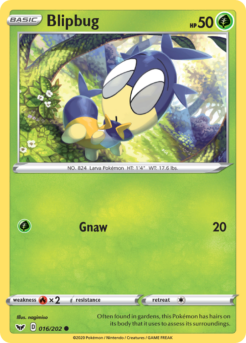
Often found in gardens, this Pokémon has hairs on its body that it uses to assess its surroundings.
Sword & Shield
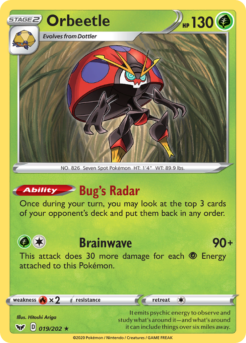
It emits psychic energy to observe and study what's around it—and what's around it can include things over six miles away.
Sword & Shield
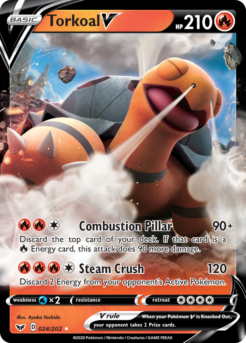
Discard the top card of your deck. If that card is a Fire Energy card, this attack does 90 more damage.

Sword & Shield
There's a hole in its tail that allows it to draw in the air it needs to keep its fire burning. If the hole gets blocked, this Pokémon will fall ill.

Sword & Shield
When it uses its special stick to strike up a beat, the sound waves produced carry revitalizing energy to the plants and flowers in the area.