




Single Strike Urshifu

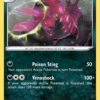
Inhabiting the mountains of a distant region, this Pokémon races across sheer cliffs, training its legs and refining its moves.
If your opponent has a Stadium in play, discard it.
| Supertype | Pokémon |
|---|---|
| Subtype | Stage 1 |
| HP | 140 |
| Types | Darkness |
| Attack | Field Crush |
| Attack cost | Darkness |
| Artist | Mitsuhiro Arita |
| Rarity | Rare Holo |
| Pokédex | 892 |
| Evolves from | Kubfu |
Información del vendedor
- Nombre de la tienda: DutchGem
- Vendedor: DutchGem
-
Dirección:
gekkestraat
179
2345GT Utrecht
Scarlet & Violet
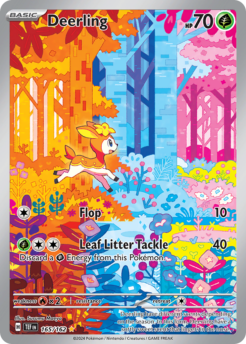
Deerling have different scents depending on the season. In this form, Deerling have a softly sweet scent that lingers in the nose.
Astral Radiance
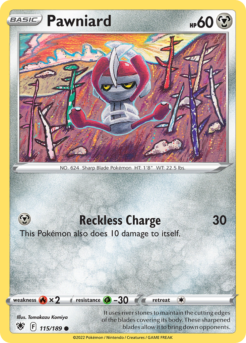
It uses river stones to maintain the cutting edges of the blades covering its body. These sharpened blades allow it to bring down opponents.
Scarlet & Violet
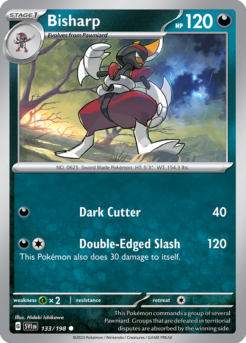
This Pokémon commands a group of several Pawniard. Groups that are defeated in territorial disputes are absorbed by the winning side.
Productos relacionados
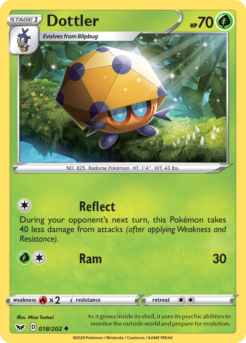
Sword & Shield
As it grows inside its shell, it uses its psychic abilities to monitor the outside world and prepare for evolution.
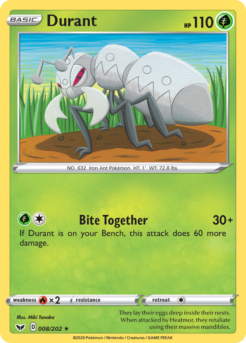
Sword & Shield
They lay their eggs deep inside their nests. When attacked by Heatmor, they retaliate using their massive mandibles.
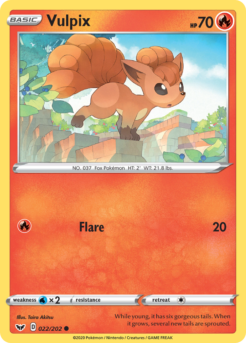
Sword & Shield
While young, it has six gorgeous tails. When it grows, several new tails are sprouted.
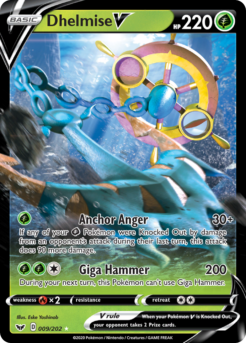
Sword & Shield
If any of your Grass Pokémon were Knocked Out by damage from an opponent’s attack during their last turn, this attack does 90 more damage.
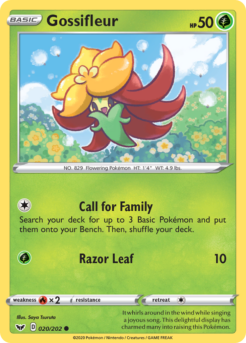
Sword & Shield
It whirls around in the wind while singing a joyous song. This delightful display has charmed many into raising this Pokémon.
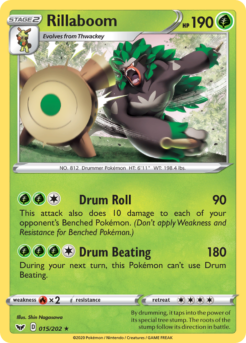
Sword & Shield
By drumming, it taps into the power of its special tree stump. The roots of the stump follow its direction in battle.
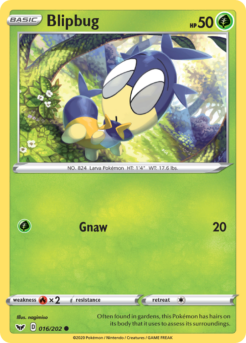
Sword & Shield
Often found in gardens, this Pokémon has hairs on its body that it uses to assess its surroundings.
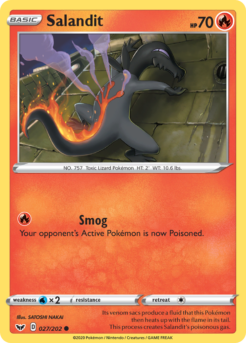
Sword & Shield
Its venom sacs produce a fluid that this Pokémon then heats up with the flame in its tail. This process creates Salandit's poisonous gas.