



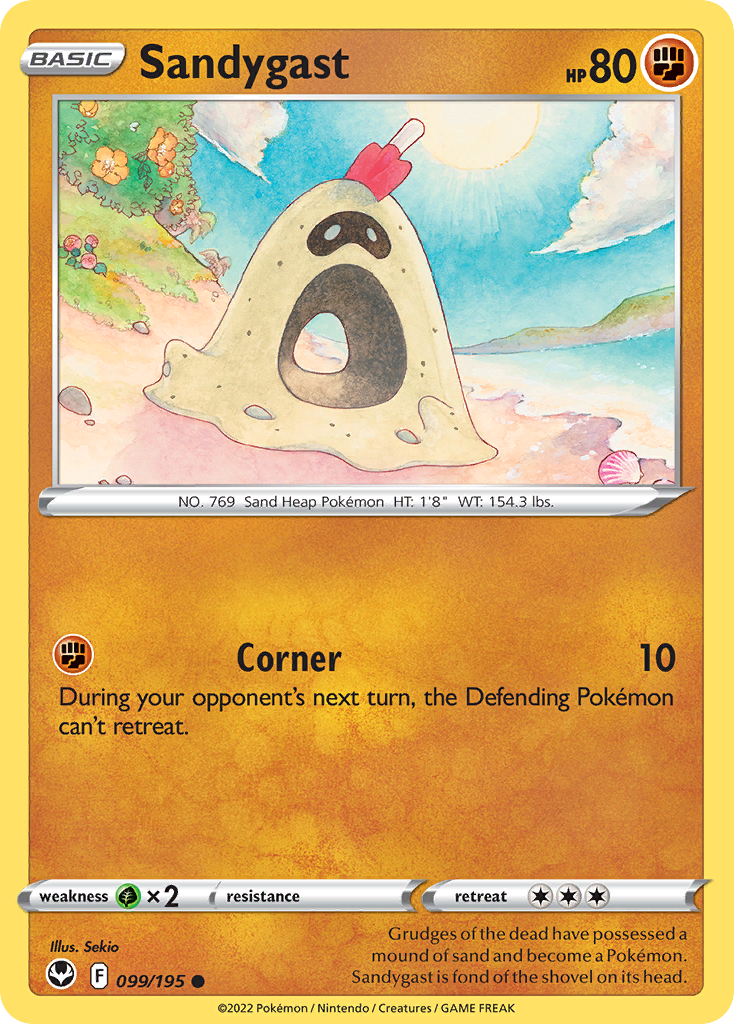
Sandygast
Grudges of the dead have possessed a mound of sand and become a Pokémon. Sandygast is fond of the shovel on its head.
During your opponent’s next turn, the Defending Pokémon can’t retreat.
| Supertype | Pokémon |
|---|---|
| Subtype | Basic |
| HP | 80 |
| Types | Fighting |
| Attack | Corner |
| Attack cost | Fighting |
| Artist | Sekio |
| Rarity | Common |
| Pokédex | 769 |
| Evolves to | Palossand |
Información del vendedor
- Nombre de la tienda: DutchGem
- Vendedor: DutchGem
-
Dirección:
gekkestraat
179
2345GT Utrecht
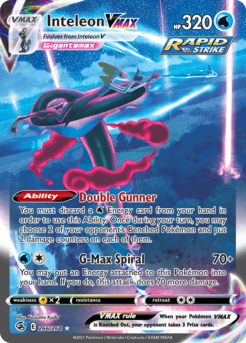
Fusion Strike
You may put an Energy attached to this Pokémon into your hand. If you do, this attack does 70 more damage.
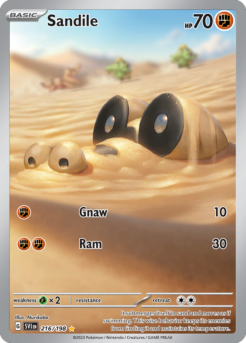
Scarlet & Violet
It submerges itself in sand and moves as if swimming. This wise behavior keeps its enemies from finding it and maintains its temperature.
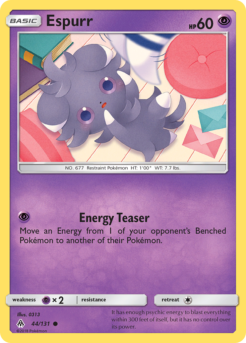
Forbidden Light
It has enough psychic energy to blast everything within 300 feet of itself, but it has no control over its power.
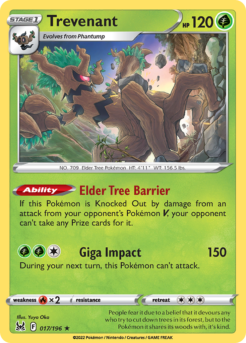
Lost Origin
People fear it due to a belief that it devours any who try to cut down trees in its forest, but to the Pokémon it shares its woods with, it's kind.
Base
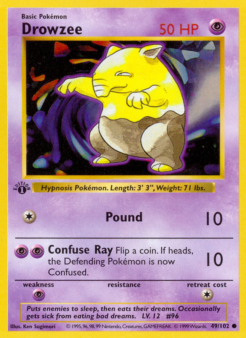
Puts enemies to sleep, then eats their dreams. Occasionally gets sick from eating bad dreams.
Base
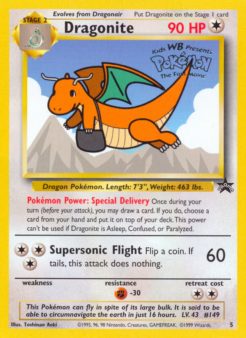
This Pokémon can fly is spite of its large bulk. It is said to be able to circumnavigate the earth in just 16 hours.
Productos relacionados
Sword & Shield
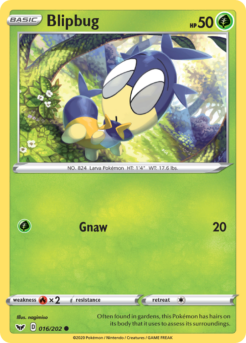
Often found in gardens, this Pokémon has hairs on its body that it uses to assess its surroundings.
Sword & Shield
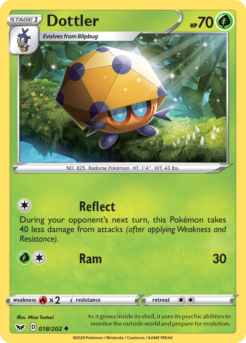
As it grows inside its shell, it uses its psychic abilities to monitor the outside world and prepare for evolution.
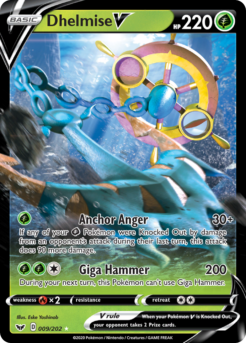
Sword & Shield
If any of your Grass Pokémon were Knocked Out by damage from an opponent’s attack during their last turn, this attack does 90 more damage.
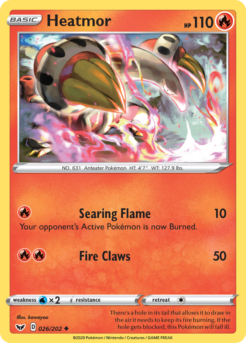
Sword & Shield
There's a hole in its tail that allows it to draw in the air it needs to keep its fire burning. If the hole gets blocked, this Pokémon will fall ill.
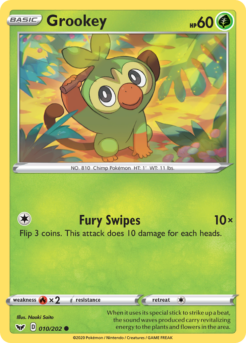
Sword & Shield
When it uses its special stick to strike up a beat, the sound waves produced carry revitalizing energy to the plants and flowers in the area.
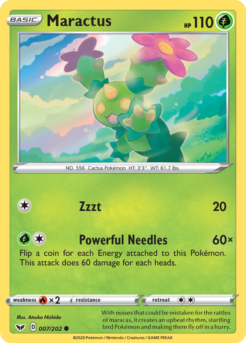
Sword & Shield
With noises that could be mistaken for the rattles of maracas, it creates an upbeat rhythm, startling bird Pokémon and making them fly off in a hurry.
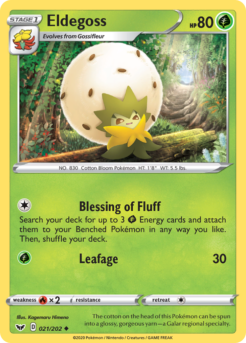
Sword & Shield
The cotton on the head of this Pokémon can be spun into a glossy, gorgeous yarn—a Galar regional specialty.
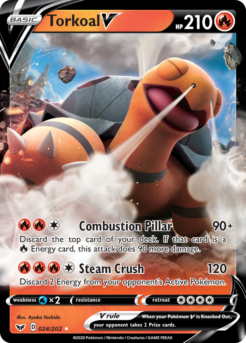
Sword & Shield
Discard the top card of your deck. If that card is a Fire Energy card, this attack does 90 more damage.