



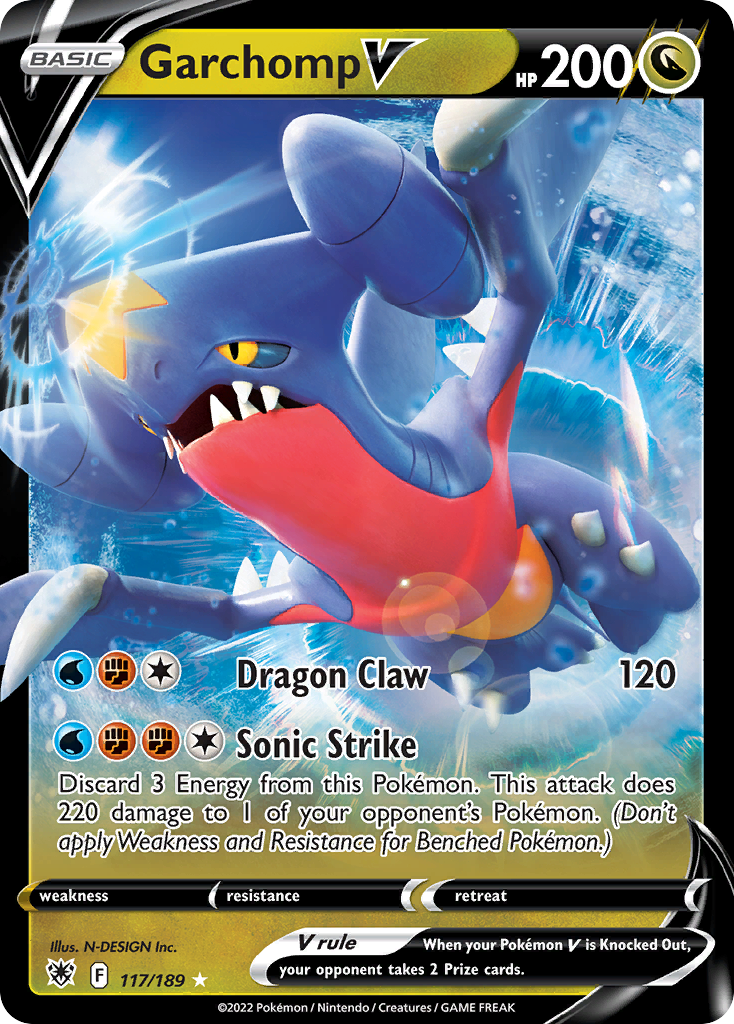
| Supertype | Pokémon |
|---|---|
| Subtype | Basic |
| HP | 200 |
| Types | Dragon |
| Attack | Dragon Claw |
| Attack cost | Water |
| Artist | N-DESIGN Inc. |
| Rarity | Rare Holo V |
| Pokédex | 445 |
Información del vendedor
- Nombre de la tienda: DutchGem
- Vendedor: DutchGem
-
Dirección:
gekkestraat
179
2345GT Utrecht
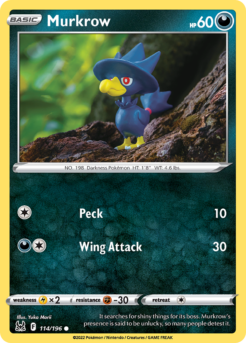
Lost Origin
It searches for shiny things for its boss. Murkrow's presence is said to be unlucky, so many people detest it.
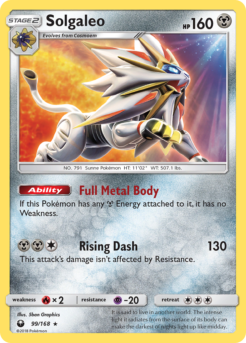
Celestial Storm
It is said to live in another world. The intense light it radiates from the surface of its body can make the darkest of nights light up like midday.
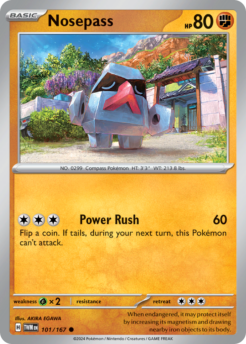
Scarlet & Violet
When endangered, it may protect itself by increasing its magnetism and drawing nearby iron objects to its body.
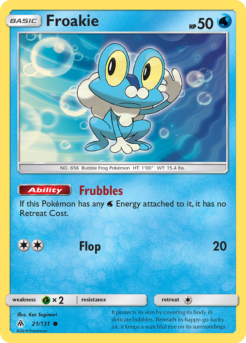
Forbidden Light
It protects its skin by covering its body in delicate bubbles. Beneath its happy-go-lucky air, it keeps a watchful eye on its surroundings.
Productos relacionados
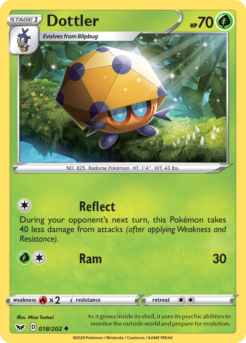
Sword & Shield
As it grows inside its shell, it uses its psychic abilities to monitor the outside world and prepare for evolution.
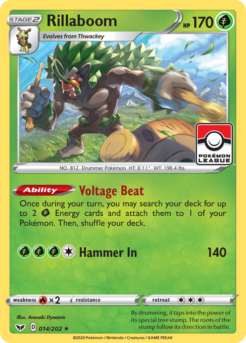
Sword & Shield
By drumming, it taps into the power of its special tree stump. The roots of the stump follow its direction in battle.
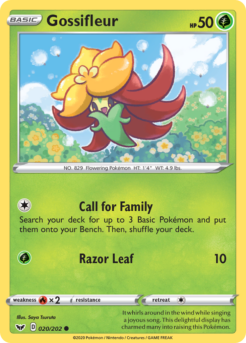
Sword & Shield
It whirls around in the wind while singing a joyous song. This delightful display has charmed many into raising this Pokémon.
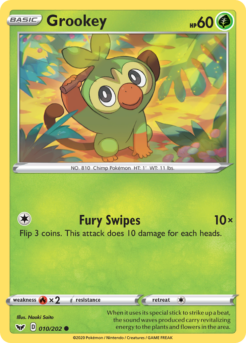
Sword & Shield
When it uses its special stick to strike up a beat, the sound waves produced carry revitalizing energy to the plants and flowers in the area.
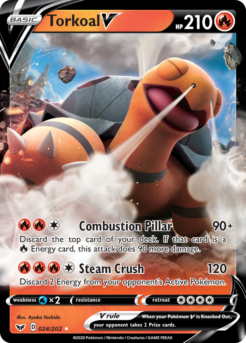
Sword & Shield
Discard the top card of your deck. If that card is a Fire Energy card, this attack does 90 more damage.
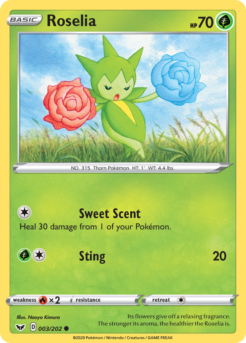
Sword & Shield
Its flowers give off a relaxing fragrance. The stronger its aroma, the healthier the Roselia is.
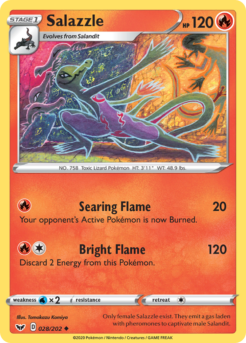
Sword & Shield
Only female Salazzle exist. They emit a gas laden with pheromones to captivate male Salandit.
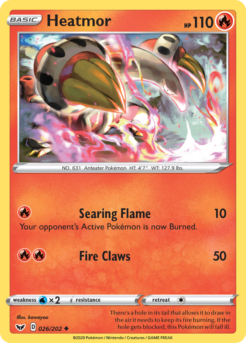
Sword & Shield
There's a hole in its tail that allows it to draw in the air it needs to keep its fire burning. If the hole gets blocked, this Pokémon will fall ill.