



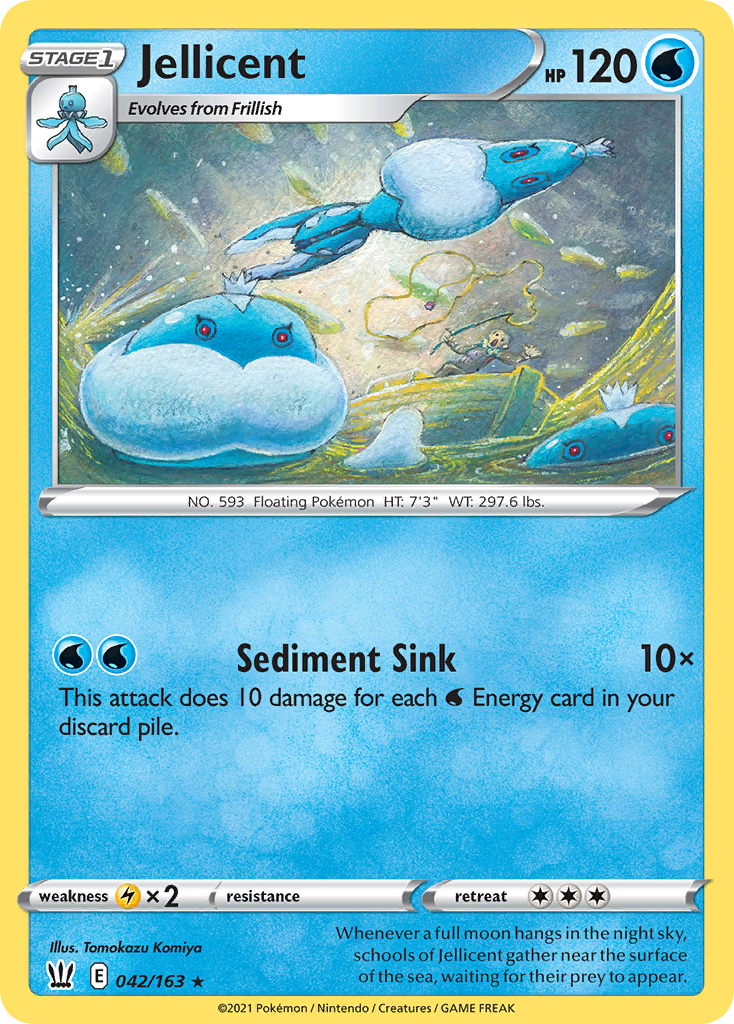
Jellicent
Whenever a full moon hangs in the night sky, schools of Jellicent gather near the surface of the sea, waiting for their prey to appear.
This attack does 10 damage for each Water Energy card in your discard pile.
| Supertype | Pokémon |
|---|---|
| Subtype | Stage 1 |
| HP | 120 |
| Types | Water |
| Attack | Sediment Sink |
| Attack cost | Water |
| Artist | Tomokazu Komiya |
| Rarity | Rare |
| Pokédex | 593 |
| Evolves from | Frillish |
Información del vendedor
- Nombre de la tienda: DutchGem
- Vendedor: DutchGem
-
Dirección:
gekkestraat
179
2345GT Utrecht
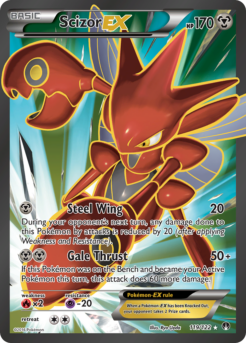
BREAKpoint
During your opponent’s next turn, any damage done to this Pokémon by attacks is reduced by 20 (after applying Weakness and Resistance).
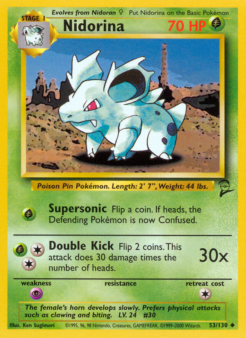
Base
The female's horn develops slowly. Prefers physical attacks such as clawing and biting.
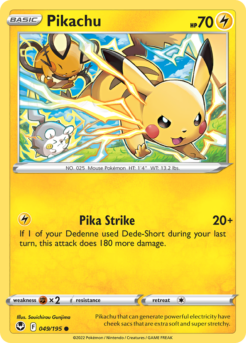
Silver Tempest
Pikachu that can generate powerful electricity have cheek sacs that are extra soft and super stretchy.

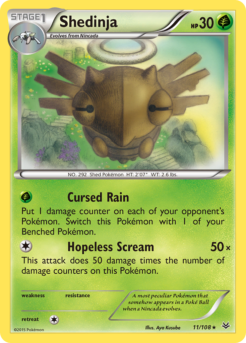
Roaring Skies
A most peculiar Pokémon that somehow appears in a Poké Ball when a Nincada evolves.
Productos relacionados
Sword & Shield
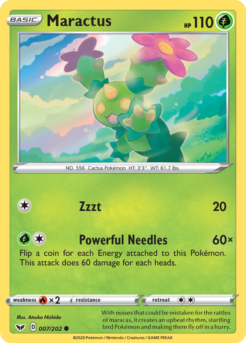
With noises that could be mistaken for the rattles of maracas, it creates an upbeat rhythm, startling bird Pokémon and making them fly off in a hurry.
Sword & Shield
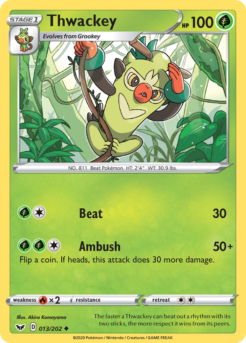
The faster a Thwackey can beat out a rhythm with its two sticks, the more respect it wins from its peers.
Sword & Shield
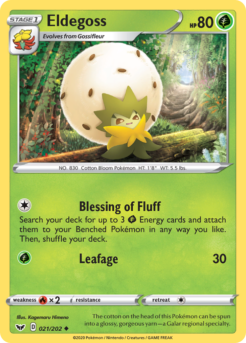
The cotton on the head of this Pokémon can be spun into a glossy, gorgeous yarn—a Galar regional specialty.
Sword & Shield
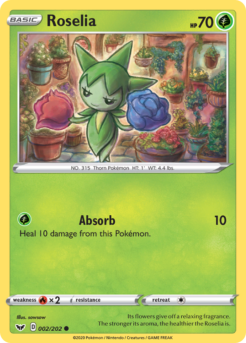
Its flowers give off a relaxing fragrance. The stronger its aroma, the healthier the Roselia is.
Sword & Shield
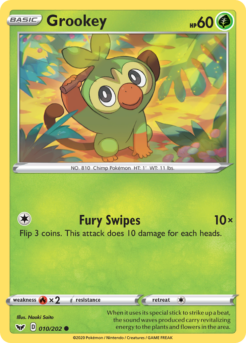
When it uses its special stick to strike up a beat, the sound waves produced carry revitalizing energy to the plants and flowers in the area.
Sword & Shield
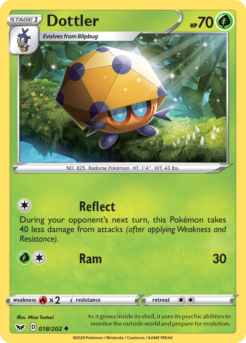
As it grows inside its shell, it uses its psychic abilities to monitor the outside world and prepare for evolution.
Sword & Shield
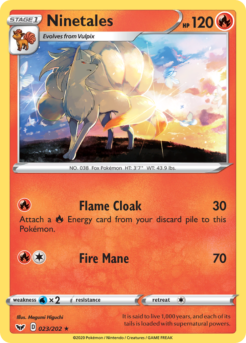
It is said to live 1,000 years, and each of its tails is loaded with supernatural powers.
Sword & Shield
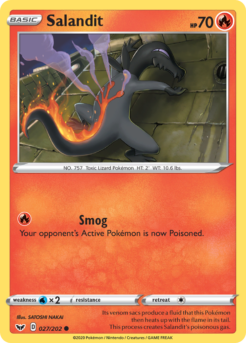
Its venom sacs produce a fluid that this Pokémon then heats up with the flame in its tail. This process creates Salandit's poisonous gas.