



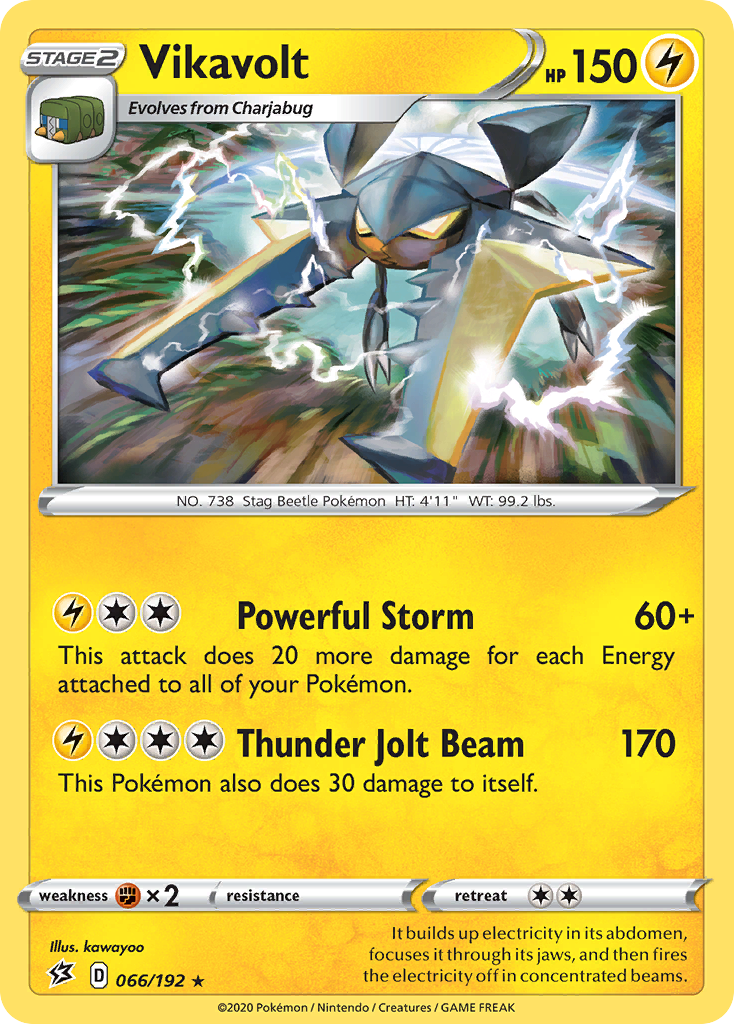
Vikavolt
It builds up electricity in its abdomen, focuses it through its jaws, and then fires the electricity off in concentrated beams.
This attack does 20 more damage for each Energy attached to all of your Pokémon.
| Supertype | Pokémon |
|---|---|
| Subtype | Stage 2 |
| HP | 150 |
| Types | Lightning |
| Attack | Powerful Storm |
| Attack cost | Lightning |
| Artist | kawayoo |
| Rarity | Rare Holo |
| Pokédex | 738 |
| Evolves from | Charjabug |
Información del vendedor
- Nombre de la tienda: DutchGem
- Vendedor: DutchGem
-
Dirección:
gekkestraat
179
2345GT Utrecht
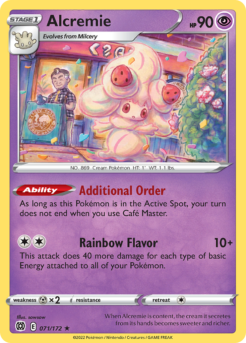
Brilliant Stars
When Alcremie is content, the cream it secretes from its hands becomes sweeter and richer.
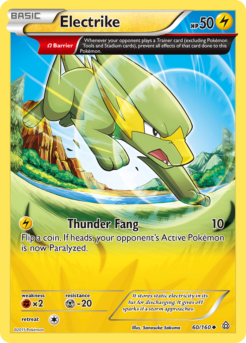
Primal Clash
It stores static electricity in its fur for discharging. It gives off sparks if a storm approaches.
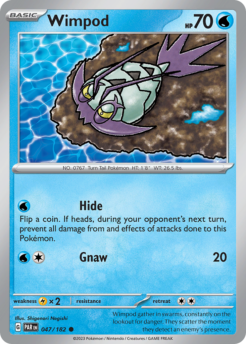
Paradox Rift
Wimpod gather in swarms, constantly on the lookout for danger. They scatter the moment they detect an enemy's presence.
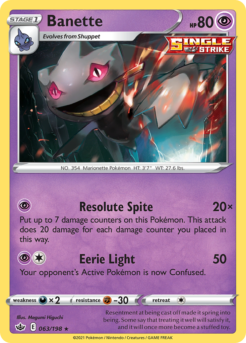
Chilling Reign
Resentment at being cast off made it spring into being. Some say that treating it well will satisfy it, and it will once more become a stuffed toy.
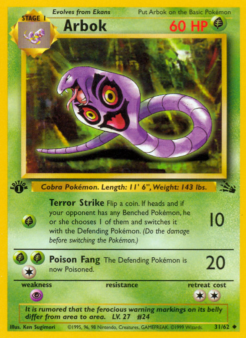
Forbidden Light
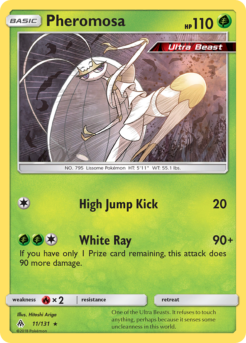
One of the Ultra Beasts. It refuses to touch anything, perhaps because it senses some uncleanness in this world.
Productos relacionados
Sword & Shield
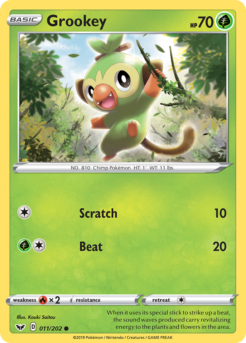
When it uses its special stick to strike up a beat, the sound waves produced carry revitalizing energy to the plants and flowers in the area.
Sword & Shield
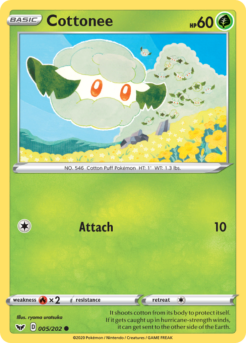
It shoots cotton from its body to protect itself. If it gets caught up in hurricane-strength winds, it can get sent to the other side of the Earth.
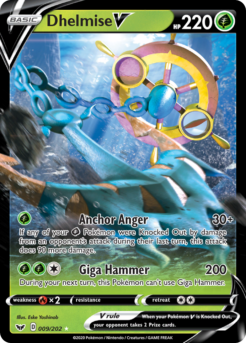
Sword & Shield
If any of your Grass Pokémon were Knocked Out by damage from an opponent’s attack during their last turn, this attack does 90 more damage.
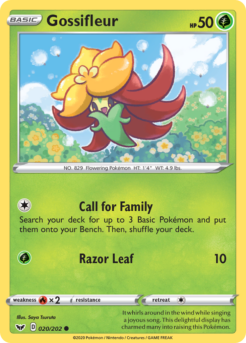
Sword & Shield
It whirls around in the wind while singing a joyous song. This delightful display has charmed many into raising this Pokémon.
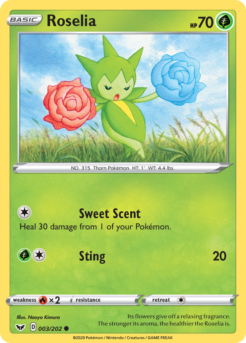
Sword & Shield
Its flowers give off a relaxing fragrance. The stronger its aroma, the healthier the Roselia is.
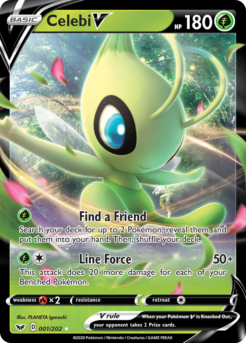
Sword & Shield
Search your deck for up to 2 Pokémon, reveal them, and put them into your hand. Then, shuffle your deck.
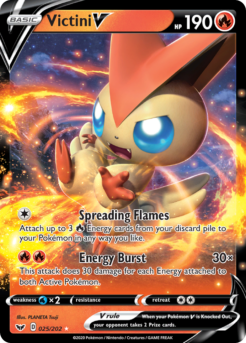
Sword & Shield
Attach up to 3 Fire Energy cards from your discard pile to your Pokémon in any way you like.
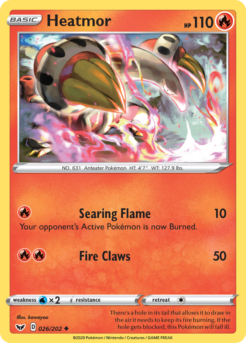
Sword & Shield
There's a hole in its tail that allows it to draw in the air it needs to keep its fire burning. If the hole gets blocked, this Pokémon will fall ill.