




Luxray


Luxray’s ability to see through objects comes in handy when it’s scouting for danger.

If this Pokémon evolved from Luxio during this turn, this attack does 100 more damage.
| Supertype | Pokémon |
|---|---|
| Subtype | Stage 2 |
| HP | 160 |
| Types | Lightning |
| Attack | Raid |
| Attack cost | Lightning |
| Artist | Hasuno |
| Rarity | Rare Holo |
| Pokédex | 405 |
| Evolves from | Luxio |
Información del vendedor
- Nombre de la tienda: DutchGem
- Vendedor: DutchGem
-
Dirección:
gekkestraat
179
2345GT Utrecht
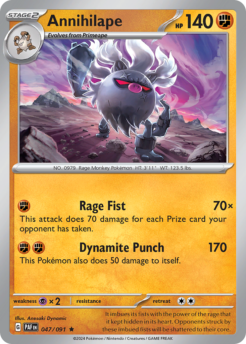
Paldean Fates
It imbues its fists with the power of the rage that it kept hidden in its heart. Opponents struck by these imbued fists will be shattered to their core.


Sun & Moon
The frills on either side of its head have cells that generate electricity when exposed to sunlight.
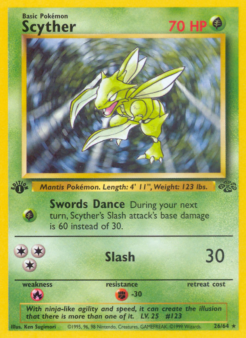
Base
With ninja-like agility and speed, it can create the illusion that there is more than one of it.
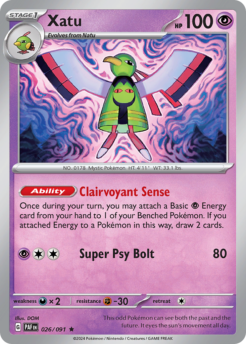
Paldean Fates
This odd Pokémon can see both the past and the future. It eyes the sun's movement all day.

Scarlet & Violet
It likes to lurk in the dark and tap shoulders with a gaseous hand. Its touch causes endless shuddering.
Productos relacionados

Sword & Shield
Search your deck for up to 2 Pokémon, reveal them, and put them into your hand. Then, shuffle your deck.
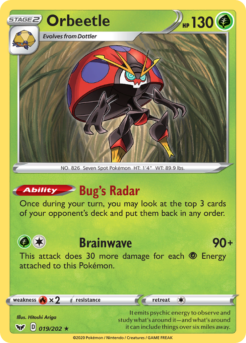
Sword & Shield
It emits psychic energy to observe and study what's around it—and what's around it can include things over six miles away.
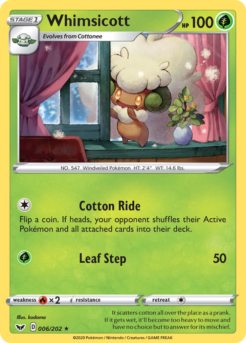
Sword & Shield
It scatters cotton all over the place as a prank. If it gets wet, it'll become too heavy to move and have no choice but to answer for its mischief.

Sword & Shield
As it grows inside its shell, it uses its psychic abilities to monitor the outside world and prepare for evolution.

Sword & Shield
If any of your Grass Pokémon were Knocked Out by damage from an opponent’s attack during their last turn, this attack does 90 more damage.

Sword & Shield
There's a hole in its tail that allows it to draw in the air it needs to keep its fire burning. If the hole gets blocked, this Pokémon will fall ill.

Sword & Shield
By drumming, it taps into the power of its special tree stump. The roots of the stump follow its direction in battle.
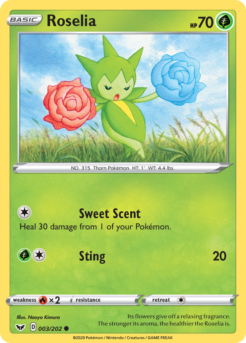
Sword & Shield
Its flowers give off a relaxing fragrance. The stronger its aroma, the healthier the Roselia is.