



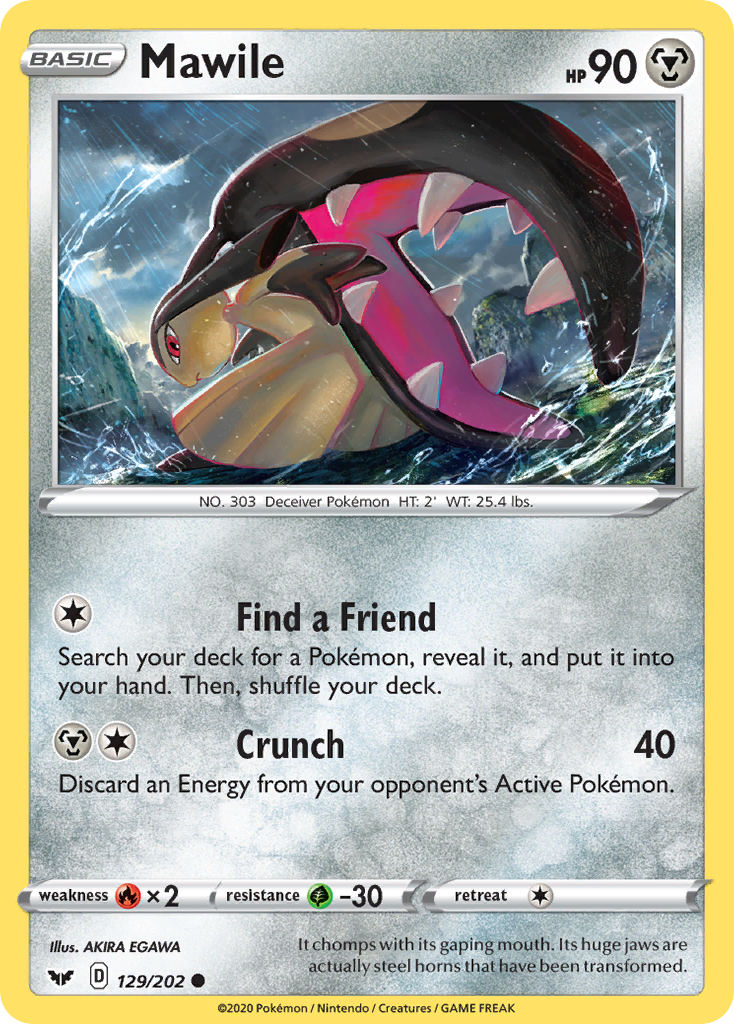
Mawile
It chomps with its gaping mouth. Its huge jaws are actually steel horns that have been transformed.
Search your deck for a Pokémon, reveal it, and put it into your hand. Then, shuffle your deck.
| Supertype | Pokémon |
|---|---|
| Subtype | Basic |
| HP | 90 |
| Types | Metal |
| Attack | Find a Friend |
| Attack cost | Colorless |
| Artist | AKIRA EGAWA |
| Rarity | Common |
| Pokédex | 303 |
Información del vendedor
- Nombre de la tienda: DutchGem
- Vendedor: DutchGem
-
Dirección:
gekkestraat
179
2345GT Utrecht
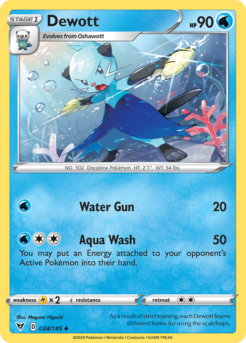
Sword & Shield
As a result of strict training, each Dewott learns different forms for using the scalchops.
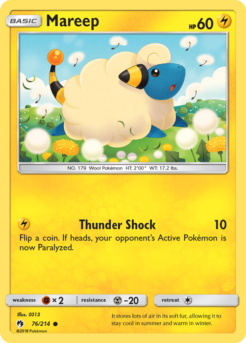
Lost Thunder
It stores lots of air in its soft fur, allowing it to stay cool in summer and warm in winter.
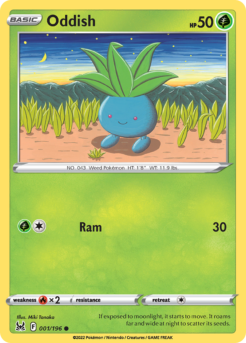
Lost Origin
If exposed to moonlight, it starts to move. It roams far and wide at night to scatter its seeds.
Paradox Rift
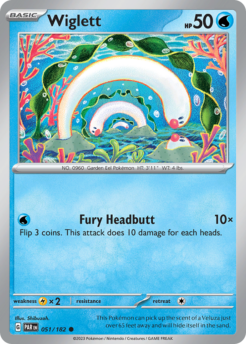
This Pokémon can pick up the scent of a Veluza just over 65 feet away and will hide itself in the sand.
Productos relacionados
Sword & Shield
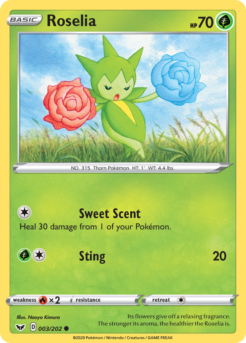
Its flowers give off a relaxing fragrance. The stronger its aroma, the healthier the Roselia is.
Sword & Shield
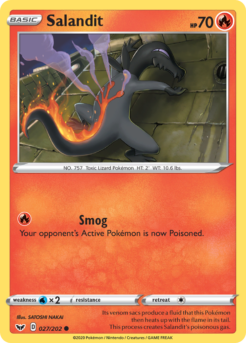
Its venom sacs produce a fluid that this Pokémon then heats up with the flame in its tail. This process creates Salandit's poisonous gas.
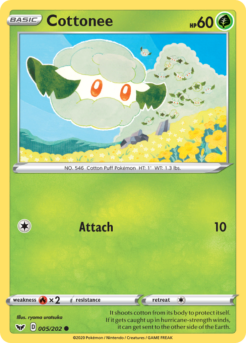
Sword & Shield
It shoots cotton from its body to protect itself. If it gets caught up in hurricane-strength winds, it can get sent to the other side of the Earth.
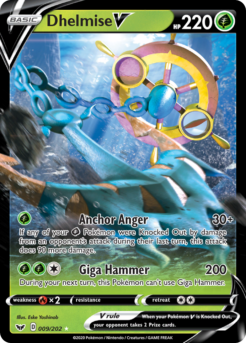
Sword & Shield
If any of your Grass Pokémon were Knocked Out by damage from an opponent’s attack during their last turn, this attack does 90 more damage.
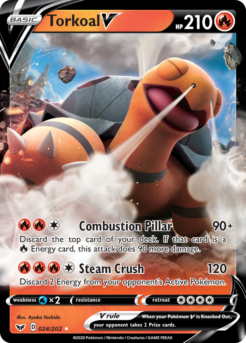
Sword & Shield
Discard the top card of your deck. If that card is a Fire Energy card, this attack does 90 more damage.
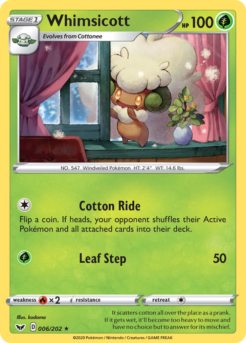
Sword & Shield
It scatters cotton all over the place as a prank. If it gets wet, it'll become too heavy to move and have no choice but to answer for its mischief.
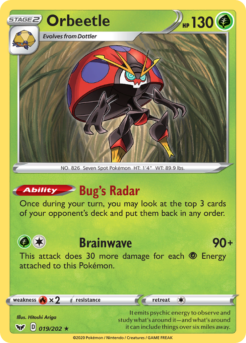
Sword & Shield
It emits psychic energy to observe and study what's around it—and what's around it can include things over six miles away.
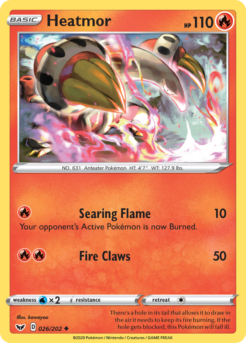
Sword & Shield
There's a hole in its tail that allows it to draw in the air it needs to keep its fire burning. If the hole gets blocked, this Pokémon will fall ill.