



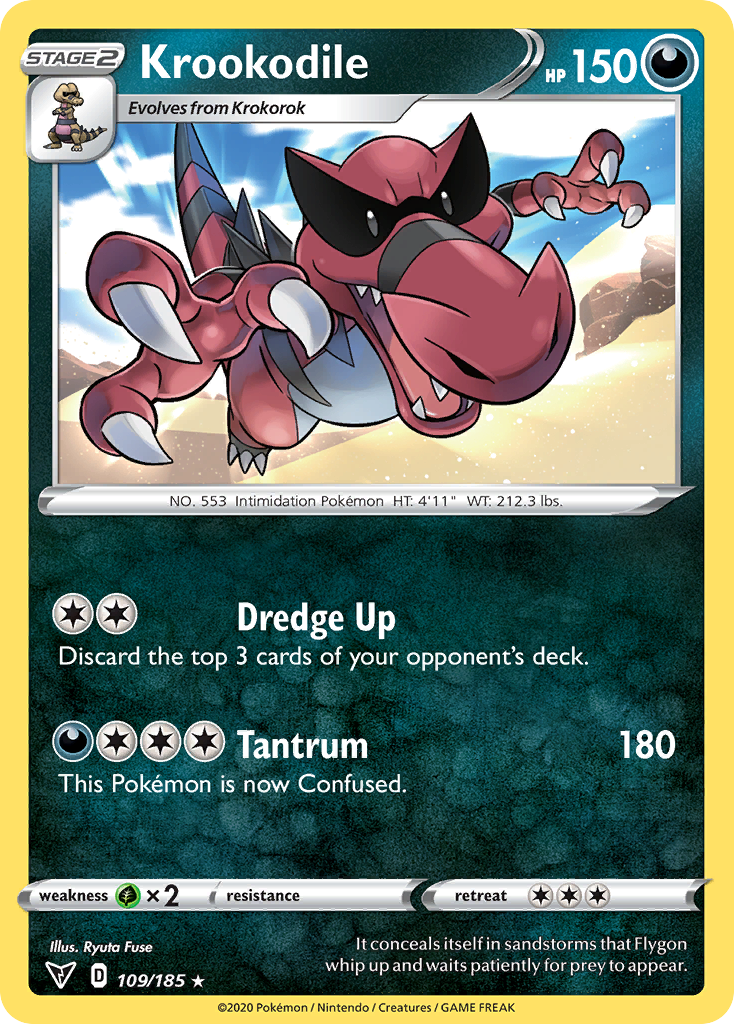
Krookodile
It conceals itself in sandstorms that Flygon whip up and waits patiently for prey to appear.

Discard the top 3 cards of your opponent’s deck.
| Supertype | Pokémon |
|---|---|
| Subtype | Stage 2 |
| HP | 150 |
| Types | Darkness |
| Attack | Dredge Up |
| Attack cost | Colorless |
| Artist | Ryuta Fuse |
| Rarity | Rare |
| Pokédex | 553 |
| Evolves from | Krokorok |
Vendor Information
- Store Name: DutchGem
- Vendor: DutchGem
-
Address:
gekkestraat
179
2345GT Utrecht
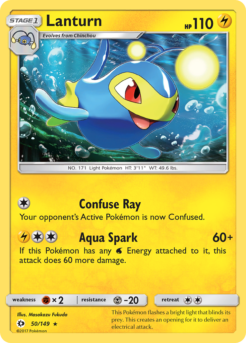
Sun & Moon
This Pokémon flashes a bright light that blinds its prey. This creates an opening for it to deliver an electrical attack.
Sun & Moon
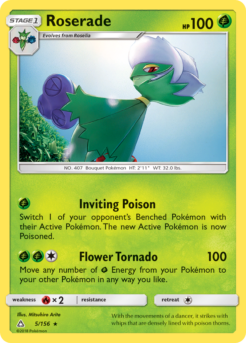
With the movements of a dancer, it strikes with whips that are densely lined with poison thorns.
Phantom Forces
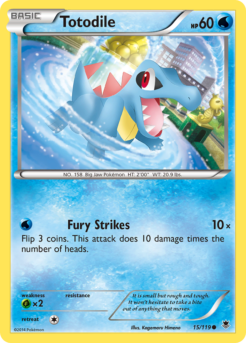
It is small but rough and tough. It won't hesitate to take a bite out of anything that moves.
Chilling Reign
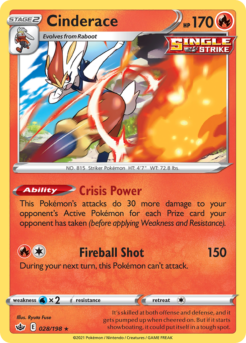
It's skilled at both offense and defense, and it gets pumped up when cheered on. But if it starts showboating, it could put itself in a tough spot.
Furious Fists
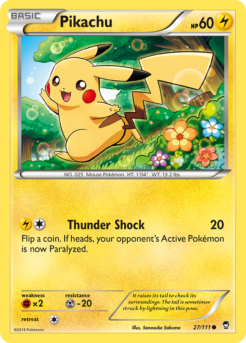
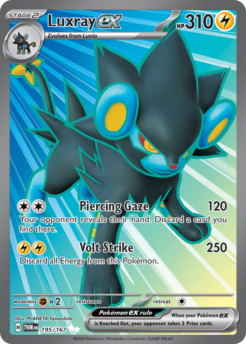
It raises its tail to check its surroundings. The tail is sometimes struck by lightning in this pose.
Ähnliche Produkte
Sword & Shield
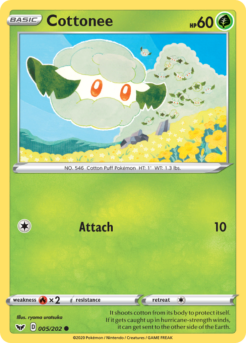
It shoots cotton from its body to protect itself. If it gets caught up in hurricane-strength winds, it can get sent to the other side of the Earth.
Sword & Shield
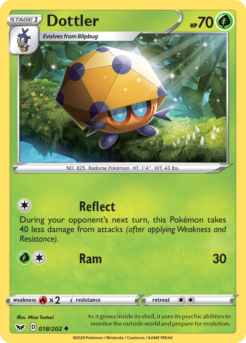
As it grows inside its shell, it uses its psychic abilities to monitor the outside world and prepare for evolution.
Sword & Shield
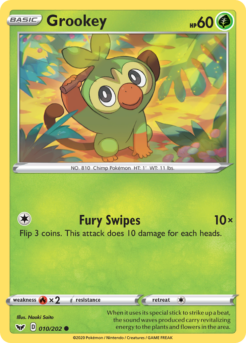
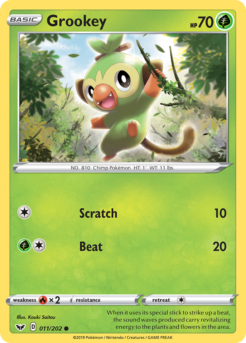
When it uses its special stick to strike up a beat, the sound waves produced carry revitalizing energy to the plants and flowers in the area.
Sword & Shield
When it uses its special stick to strike up a beat, the sound waves produced carry revitalizing energy to the plants and flowers in the area.
Sword & Shield
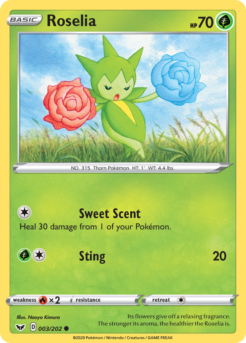
Its flowers give off a relaxing fragrance. The stronger its aroma, the healthier the Roselia is.
Sword & Shield
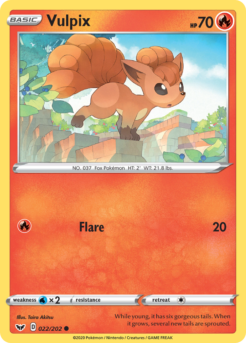
While young, it has six gorgeous tails. When it grows, several new tails are sprouted.
Sword & Shield
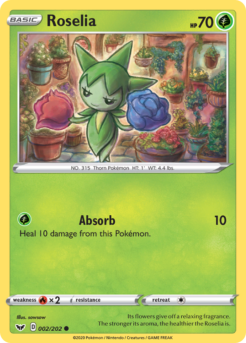
Its flowers give off a relaxing fragrance. The stronger its aroma, the healthier the Roselia is.
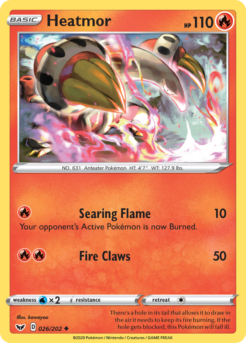
Sword & Shield
There's a hole in its tail that allows it to draw in the air it needs to keep its fire burning. If the hole gets blocked, this Pokémon will fall ill.