



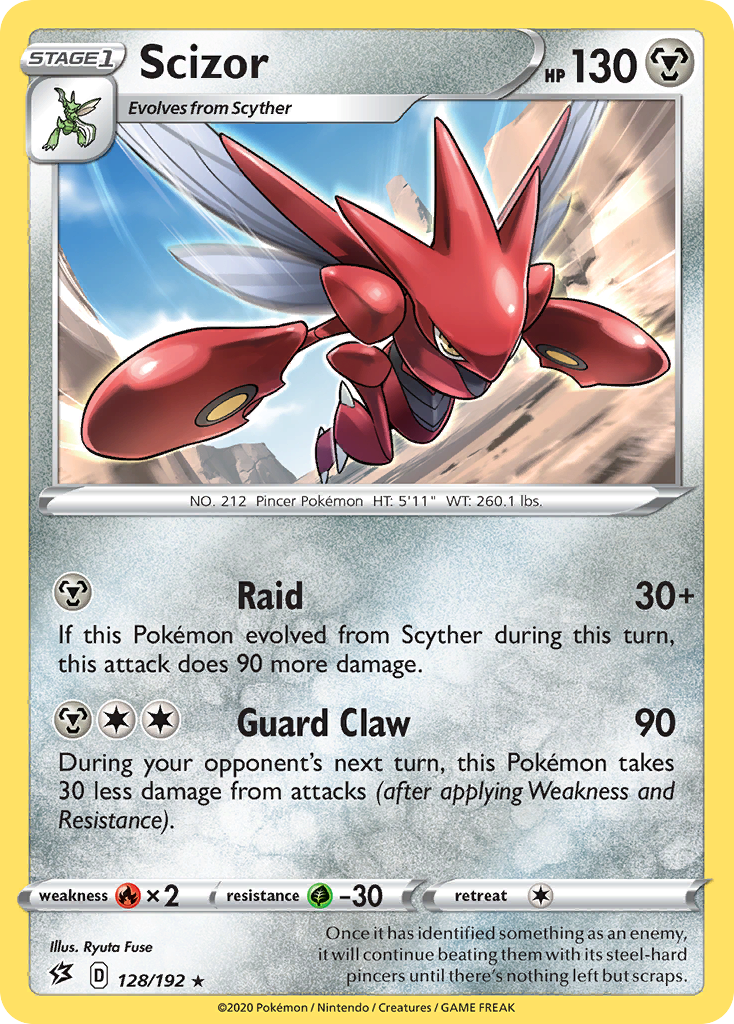
Scizor
Once it has identified something as an enemy, it will continue beating them with its steel-hard pincers until there’s nothing left but scraps.

If this Pokémon evolved from Scyther during this turn, this attack does 90 more damage.
| Supertype | Pokémon |
|---|---|
| Subtype | Stage 1 |
| HP | 130 |
| Types | Metal |
| Attack | Raid |
| Attack cost | Metal |
| Artist | Ryuta Fuse |
| Rarity | Rare |
| Pokédex | 212 |
| Evolves from | Scyther |
Vendor Information
- Store Name: DutchGem
- Vendor: DutchGem
-
Address:
gekkestraat
179
2345GT Utrecht

Phantom Forces
They make their home in deserts. They can generate their energy from basking in the sun, so eating food is not a requirement.

Darkness Ablaze
It prefers places with clean water. When its tuft runs low, it replenishes it by siphoning up water with its tail.

Sword & Shield
It stimulates its own muscles with electricity, so it can move quickly. It eases its soreness with electricity, too, so it can recover quickly as well.

Fusion Strike
Eating sulfur in its volcanic habitat is what causes explosive compounds to develop in its shell. Its droppings are also dangerously explosive.

BREAKthrough
It is not satisfied unless it eats over 880 pounds of food every day. When it is done eating, it goes promptly to sleep.

Primal Clash
This attack does 30 damage times the amount of Fairy Energy attached to all of your Pokémon.
Ähnliche Produkte

Sword & Shield
Only female Salazzle exist. They emit a gas laden with pheromones to captivate male Salandit.
Sword & Shield
After captivating opponents with its sweet scent, it lashes them with its thorny whips.

Sword & Shield
The faster a Thwackey can beat out a rhythm with its two sticks, the more respect it wins from its peers.

Sword & Shield
It whirls around in the wind while singing a joyous song. This delightful display has charmed many into raising this Pokémon.

Sword & Shield
With noises that could be mistaken for the rattles of maracas, it creates an upbeat rhythm, startling bird Pokémon and making them fly off in a hurry.
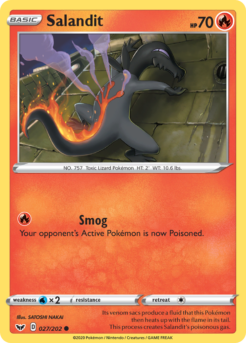
Sword & Shield
Its venom sacs produce a fluid that this Pokémon then heats up with the flame in its tail. This process creates Salandit's poisonous gas.
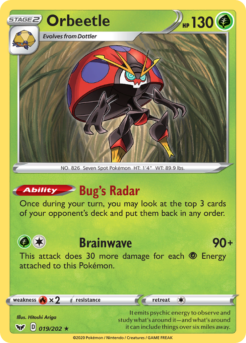
Sword & Shield
It emits psychic energy to observe and study what's around it—and what's around it can include things over six miles away.

Sword & Shield
When it uses its special stick to strike up a beat, the sound waves produced carry revitalizing energy to the plants and flowers in the area.