



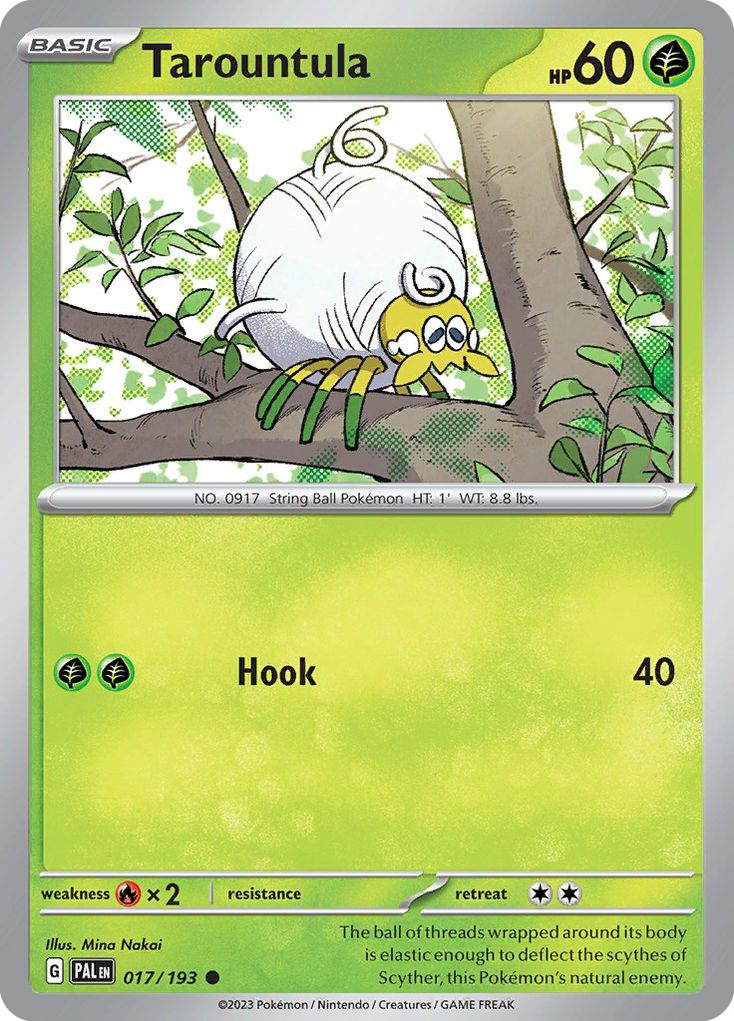
Tarountula
The ball of threads wrapped around its body is elastic enough to deflect the scythes of Scyther, this Pokémon’s natural enemy.
| Supertype | Pokémon |
|---|---|
| Subtype | Basic |
| HP | 60 |
| Types | Grass |
| Attack | Hook |
| Attack cost | Grass |
| Artist | Mina Nakai |
| Rarity | Common |
| Pokédex | 917 |
Vendor Information
- Store Name: DutchGem
- Vendor: DutchGem
-
Address:
gekkestraat
179
2345GT Utrecht
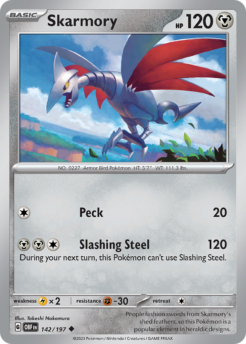
Obsidian Flames
People fashion swords from Skarmory's shed feathers, so this Pokémon is a popular element in heraldic designs.
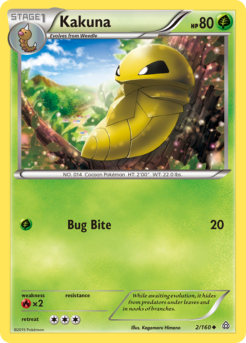
Primal Clash
While awaiting evolution, it hides from predators under leaves and in nooks of branches.
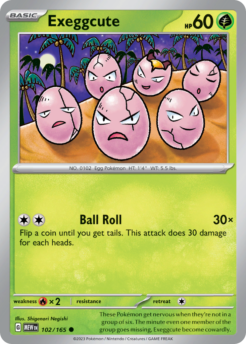
151
These Pokémon get nervous when they're not in a group of six. The minute even one member of the group goes missing, Exeggcute become cowardly.
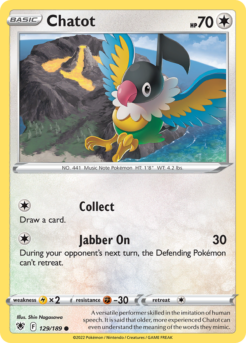
Astral Radiance
A versatile performer skilled in the imitation of human speech. It is said that older, more experienced Chatot can even understand the meaning of the words they mimic.
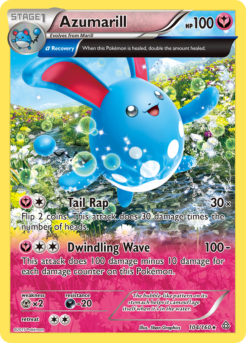
Primal Clash
The bubble-like pattern on its stomach helps it camouflage itself when it's in the water.