



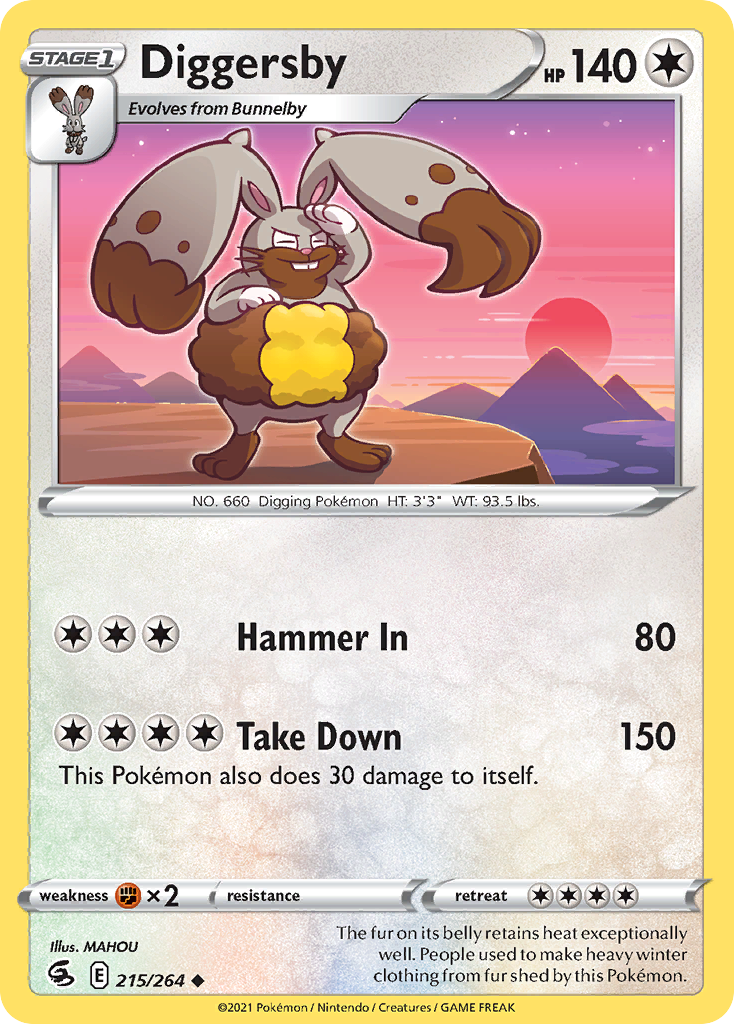
Diggersby
The fur on its belly retains heat exceptionally well. People used to make heavy winter clothing from fur shed by this Pokémon.

| Supertype | Pokémon |
|---|---|
| Subtype | Stage 1 |
| HP | 140 |
| Types | Colorless |
| Attack | Hammer In |
| Attack cost | Colorless |
| Artist | MAHOU |
| Rarity | Uncommon |
| Pokédex | 660 |
| Evolves from | Bunnelby |
Vendor Information
- Store Name: DutchGem
- Vendor: DutchGem
-
Address:
gekkestraat
179
2345GT Utrecht
Scarlet & Violet
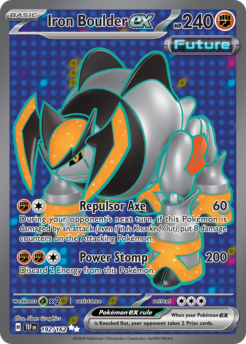
During your opponent’s next turn, if this Pokémon is damaged by an attack (even if it is Knocked Out), put 8 damage counters on the Attacking Pokémon.
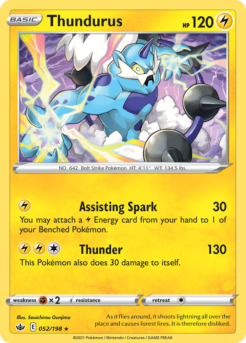
Chilling Reign
As it flies around, it shoots lightning all over the place and causes forest fires. It is therefore disliked.
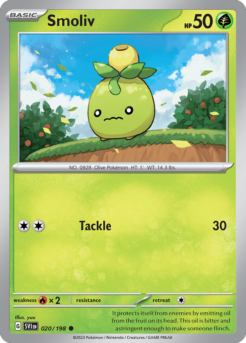
Scarlet & Violet
It protects itself from enemies by emitting oil from the fruit on its head. This oil is bitter and astringent enough to make someone flinch.
Related products
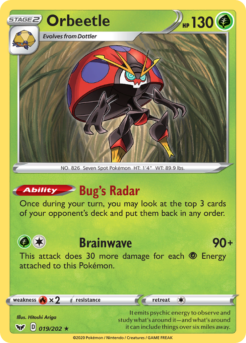
Sword & Shield
It emits psychic energy to observe and study what's around it—and what's around it can include things over six miles away.
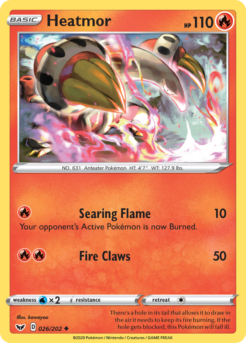
Sword & Shield
There's a hole in its tail that allows it to draw in the air it needs to keep its fire burning. If the hole gets blocked, this Pokémon will fall ill.
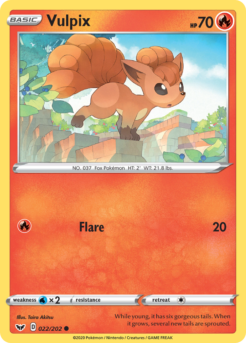
Sword & Shield
While young, it has six gorgeous tails. When it grows, several new tails are sprouted.
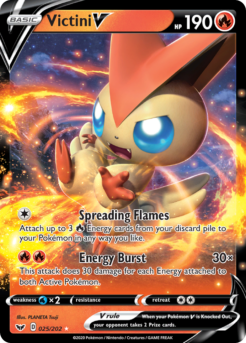
Sword & Shield
Attach up to 3 Fire Energy cards from your discard pile to your Pokémon in any way you like.
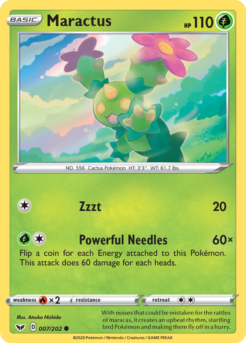
Sword & Shield
With noises that could be mistaken for the rattles of maracas, it creates an upbeat rhythm, startling bird Pokémon and making them fly off in a hurry.
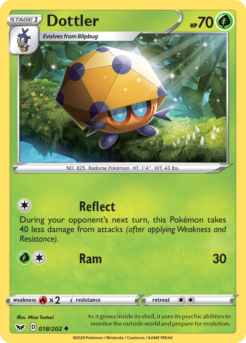
Sword & Shield
As it grows inside its shell, it uses its psychic abilities to monitor the outside world and prepare for evolution.
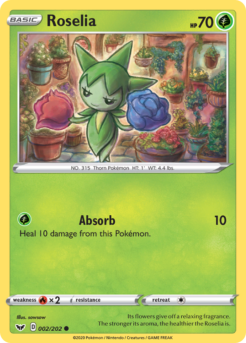
Sword & Shield
Its flowers give off a relaxing fragrance. The stronger its aroma, the healthier the Roselia is.
Sword & Shield
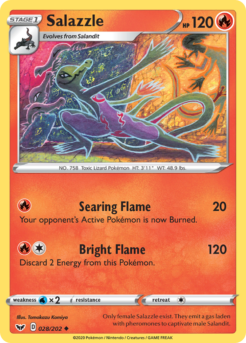
Only female Salazzle exist. They emit a gas laden with pheromones to captivate male Salandit.