



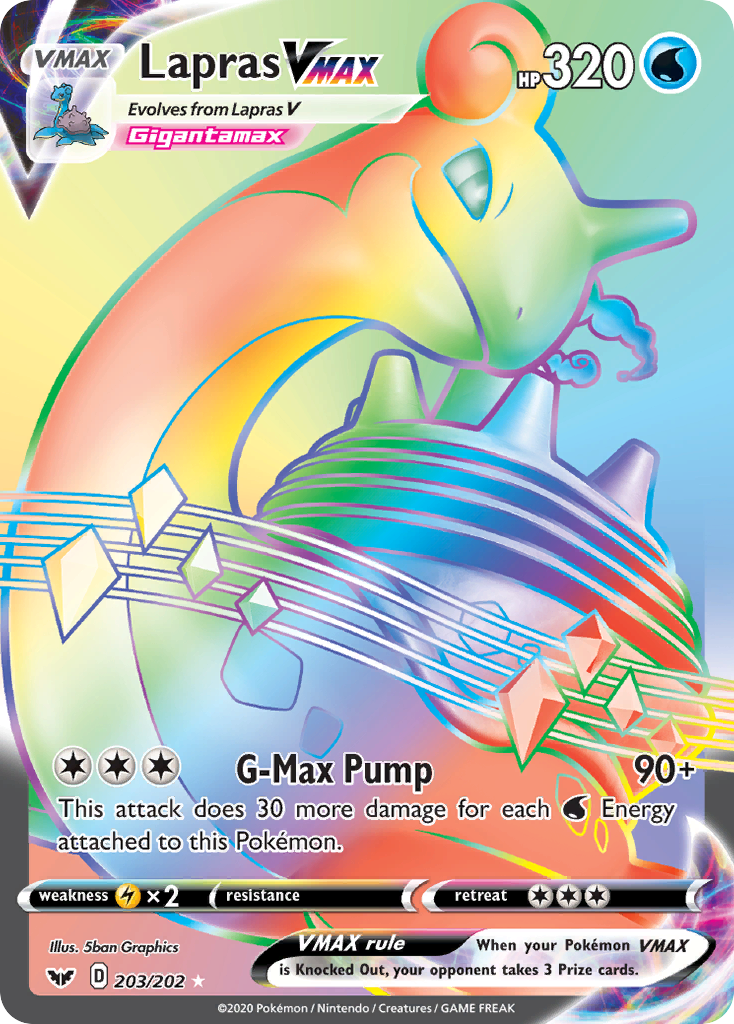


This attack does 30 more damage for each Water Energy attached to this Pokémon.
| Supertype | Pokémon |
|---|---|
| Subtype | VMAX |
| HP | 320 |
| Types | Water |
| Attack | G-Max Pump |
| Attack cost | Colorless |
| Artist | 5ban Graphics |
| Rarity | Rare Rainbow |
| Pokédex | 131 |
| Evolves from | Lapras V |
Vendor Information
- Store Name: DutchGem
- Vendor: DutchGem
-
Address:
gekkestraat
179
2345GT Utrecht

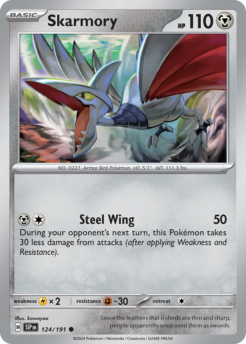
Scarlet & Violet
During your opponent’s next turn, this Pokémon takes 30 less damage from attacks (after applying Weakness and Resistance).
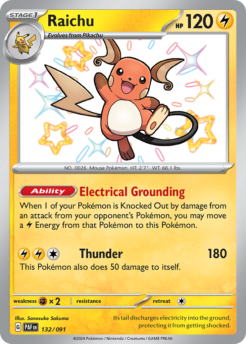
Paldean Fates
Its tail discharges electricity into the ground, protecting it from getting shocked.
Sun & Moon
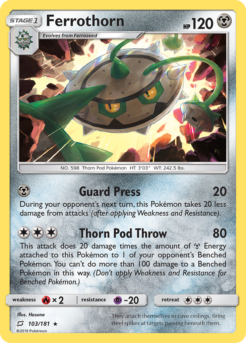
They attach themselves to cave ceilings, firing steel spikes at targets passing beneath them.
Celestial Storm
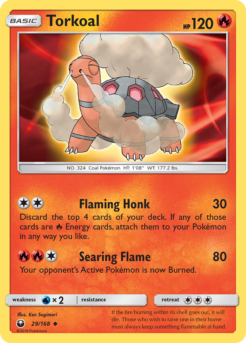
If the fire burning within its shell goes out, it will die. Those who wish to raise one in their home must always keep something flammable at hand.

Cosmic Eclipse
When it tightens its belt, it becomes stronger. Wild Throh use vines to weave their own belts.
Related products
Sword & Shield
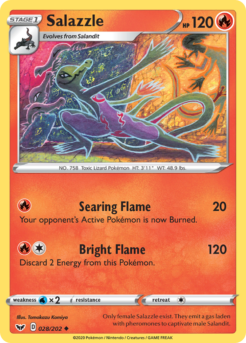
Only female Salazzle exist. They emit a gas laden with pheromones to captivate male Salandit.
Sword & Shield
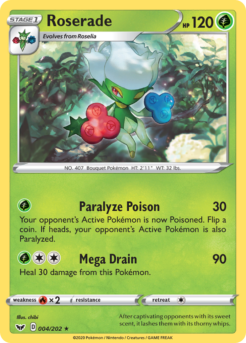
After captivating opponents with its sweet scent, it lashes them with its thorny whips.
Sword & Shield
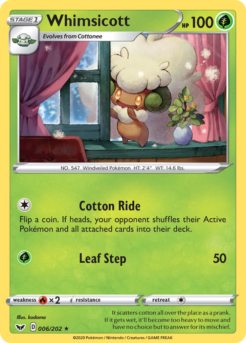
It scatters cotton all over the place as a prank. If it gets wet, it'll become too heavy to move and have no choice but to answer for its mischief.
Sword & Shield
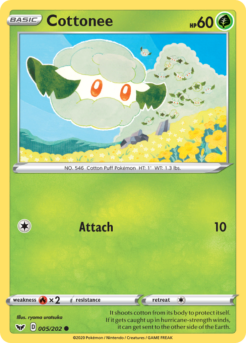
It shoots cotton from its body to protect itself. If it gets caught up in hurricane-strength winds, it can get sent to the other side of the Earth.
Sword & Shield
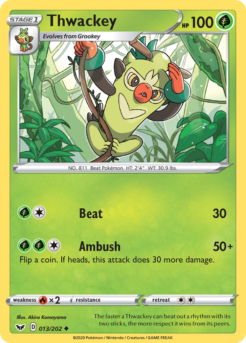
The faster a Thwackey can beat out a rhythm with its two sticks, the more respect it wins from its peers.
Sword & Shield
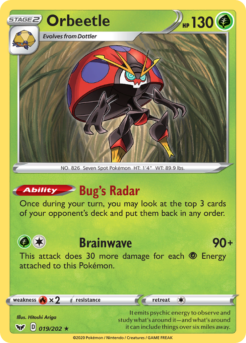
It emits psychic energy to observe and study what's around it—and what's around it can include things over six miles away.
Sword & Shield
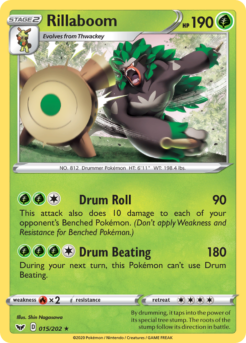
By drumming, it taps into the power of its special tree stump. The roots of the stump follow its direction in battle.
Sword & Shield
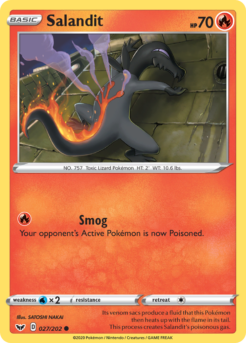
Its venom sacs produce a fluid that this Pokémon then heats up with the flame in its tail. This process creates Salandit's poisonous gas.